Hudson River Park

why we love it
Hudson River Park is a four-mile waterfront park,stretching along Manhattan's west side from Battery Park City to West 59th Street. Opened in 1998, it's one of the city's primary spaces for outdoor recreation, organized as a series of interconnected lawns, sports fields, and playgrounds, dog runs, cafés, and landscaped gardens. It’s also home to the Hudson River Greenway, a 12-mile paved, car-free path running the length of Manhattan's west side. As one of the few places in the city where you can cover long distances completely uninterrupted, the greenway draws cyclists, runners, and commuters alike.
Photo courtesy of Hudson River Park
Originally featured in The New York City Parks and Green Spaces Guide
Activities
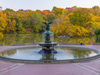
Central Park
It would be impossible not to include Central Park—New York's most coveted green space and, in many ways, what the rest of the city orbits around. Stretching 2.5 miles from 59th to 110th Street, it offers a mix of open lawns, wooded paths, water, and formal gardens. See the iconic landmarks at least once: the cinematic Bethesda Terrace and fountain, Belvedere Castle, and The Lake—which is most memorably experienced by rowboat (rentable onsite). Seasonal moments make it worth returning to, from ice skating at Wollman Rink to Shakespeare in the Park at the newly renovated Delacorte Theater. But the real appeal is in the in-between: long walks around the Jacqueline Kennedy Onassis Reservoir with its uninterrupted skyline views, quieter shaded paths that feel removed from the city, and the simple act of finding a bench or patch of grass to sit with a coffee. For kids, the Central Park Zoo, the petting-friendly Tisch Children's Zoo, and numerous playgrounds make for an enjoyable afternoon outdoors.
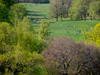
Prospect Park
Prospect Park is one of Brooklyn's most special—and expansive—green spaces. Designed by the same landscape architects behind Central Park, it's often considered their more resolved work, with a stronger sense of cohesion and more seamlessly integrated landscapes. The borough's second largest park borders the Brooklyn Museum, and Brooklyn Botanic Garden, with Grand Army Plaza serving as a grand entrance (reminiscent of the Arc de Triomphe in scale) and home to a standout greenmarket on Saturdays. Inside, the West Drive is ideal for running or biking, while the Long Meadow draws people for picnics, casual games, and afternoons on the grass. There's a carousel and the Prospect Park Zoo, but the real hub is the LeFrak Center at Lakeside—an ice rink in winter that becomes a roller skating area in warmer months, with a "Splash Pad" water area, seasonal yoga, pickleball, and a café and bar.

The High Line
The High Line is a public park built on a former elevated freight rail line along Manhattan's west side, running from the Meatpacking District through Chelsea to Hudson Yards. It's a linear path with planted gardens, seating areas, and framed views of the city and the Hudson River. What makes it special is the design: The original rail tracks are woven into the landscaping, and the plantings shift with the seasons. Rather than escaping the city, you move through it from a different vantage point, catching glimpses of streets and buildings you'd never notice from the ground. We recommend it for a walk with a friend when you want to get your steps in, but be warned—it's almost always crowded.

Domino Park
Domino Park is a six-acre waterfront park along the East River in Williamsburg, located on the former site of the Domino Sugar Factory. The design leans into that history, with preserved industrial elements woven throughout—cranes, syrup tanks, and gantries that give the park a distinct identity. It centers on a long elevated walkway running the length of the park, with uninterrupted views of the Manhattan skyline. The layout is unusually defined, organized into zones—a playground, beach volleyball courts, a dog run, and open lawns—that make it easy to use whether you're there to exercise, meet friends, or relax by the water.

Little Island
Opened in May 2021, Little Island is a park built directly over the Hudson River on the site of former Pier 54, which was heavily damaged during Hurricane Sandy. The park sits on sculptural concrete "tulips," creating a landscape of hills, paths, and lush greenery that feels distinct from a typical flat city park. Most of the plants are native, chosen to support pollinators giving the island a different feel in every season. Conceived to blend landscape with performance, the island comes alive in the warmer months with programming from live music and theater to dance and cabaret, plus food pop-ups from the likes of Levain and Piscator.

The Hills on Governors Island
On Governors Island, just minutes from Lower Manhattan and the Brooklyn waterfront by ferry, the Hills are a series of man-made rises at the southern end of the island, built on land once used by the U.S. Army and Coast Guard. Reaching about 75 feet above sea level, they create a sense of elevation that’s rare in New York, with open views across the harbor toward Lower Manhattan, Brooklyn, and the Statue of Liberty. Each hill has its own character—some built for slower climbs and viewpoints, others more interactive, with slides, public art, and grassy areas to traverse.

Riverside Park
Stretching four miles along the Hudson River from 72nd to 158th Street, Riverside Park ranks among Manhattan's best waterfront destinations. Long, uninterrupted paths for walking, running, and biking traverse the park, all with river views. Designed by the same landscape architect as Central Park, this park takes a distinctly different approach—its landscape merges seamlessly with the natural, sloping riverbanks rather than imposing a formal, manicured design. The park is widely known as the best place to watch the sunset in Manhattan, with piers, lawns, and benches scattered throughout, along with tennis courts, playgrounds, and sports fields.
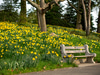
Brooklyn Botanic Garden
The Brooklyn Botanic Garden is one of our favorite green spaces in the city. Founded in 1910, it's home to more than 12,000 kinds of plants, organized into a series of distinct "gardens within the garden," each with its own character. What makes it stand out is how it embraces seasonality—there’s cherry blossoms in spring, lush greenery in summer, foliage in fall, and indoor exhibitions in winter—so it never feels static. That ever-changing sensation extends to thoughtful exhibitions, like the one a few years back where Yayoi Kusama's iconic dotted sculptures were placed throughout the grounds. The manageable scale lends itself to a few unplanned hours wandering from one corner to the next.

Elizabeth Street Garden
Elizabeth Street Garden is a small, hidden garden in Nolita that feels almost out of place in downtown Manhattan. Nestled between buildings, it's filled with dense greenery, winding paths, and an unexpected collection of classical-style sculptures, giving it the feel of a slightly overgrown European courtyard. What makes it special is how unpolished and personal it is—there’s no formal landscaping, but rather a patchwork of plants, stone, and objects accumulated over time. It's simply somewhere to slow down for a bit and quiet your mind, tucked into the middle of Nolita.
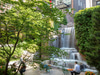
Greenacre Park
Greenacre Park is a small, tucked-away park in Midtown Manhattan that offers a sense of calm despite the busy streets around it. It's defined by a large cascading waterfall at the back, which drowns out street noise and sets the tone for the space. Even though it’s a small space, terraces, movable seating, and dense plantings create little sanctuaries that feel relatively private amid the city.
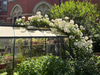
Jefferson Market Garden
Jefferson Market Garden is a small, volunteer-maintained community garden in Greenwich Village, tucked behind the Gothic-style Jefferson Market Library. It's easy to miss, but inside you'll find winding brick paths, beautifully kept flowers, seasonal plantings, and shaded benches that make it feel removed from the surrounding streets. There's no programming or open lawn—just a quiet, well-kept space to sit, read, or take a break.

New York Botanical Garden
The New York Botanical Garden is one of the most expansive—and immersive—green spaces in the city. Spanning 250 acres in the Bronx, it's the perfect place to go when you want to be fully outside and feel like you've actually left the city. It brings together formal gardens, curated plant collections, and a 50-acre old-growth forest—the last of its kind in New York. At its center is the Enid A. Haupt Conservatory, a landmark glasshouse with climate-specific environments and rotating exhibitions often worth the trip alone.
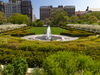
The Conservatory Garden
The Conservatory Garden is the most formal garden within Central Park, set in the northeast corner. Divided into three sections—Italian, French, and English—it's defined by symmetry, manicured hedges, fountains, and well-kept seasonal plants. Unlike the rest of Central Park's natural, open layout, this area feels controlled and quiet, with fewer crowds and a more deliberate design. It's one of the best places in the park to sit, read, or take a slower walk, especially when the flowers are in bloom.

The Abby Aldrich Rockefeller Sculpture Garden at MoMA
The MoMA Sculpture Garden—officially the Abby Aldrich Rockefeller Sculpture Garden at the Museum of Modern Art—is a quiet outdoor extension of the museum. Designed as a "Midtown oasis," it features a rotating collection of modern and contemporary sculptures in an open-air setting. Key works often on view include Pablo Picasso's She-Goat, Henri Matisse's Back (I–IV) series, and Joan Miró's Moonbird, each installed with room to be experienced up close. It's one of the few places in the city where you can sit outside, surrounded by major artworks, without it feeling overly formal—a calm, easy reset in the middle of Manhattan.

The Astor Chinese Garden Court
The Astor Chinese Garden Court, on the second floor of the Metropolitan Museum of Art, is a full-scale re-creation of a traditional Ming dynasty-style scholar's garden. It's easy to miss, but once inside, it feels completely separate from the surrounding galleries. Designed in collaboration with artisans from Suzhou, China, the space follows classical garden principles—carefully placed rocks, water features, carved woodwork, and framed views. The sound of water, the enclosed courtyard, and the restrained palette create a restorative sense of quiet.

The Isamu Noguchi Foundation and Garden Museum
The garden at the Isamu Noguchi Museum is a serene outdoor courtyard designed by Isamu Noguchi as part of his museum in Long Island City. Unlike traditional sculpture gardens, it was conceived as a complete environment—where landscape, architecture, and artwork are all experienced together. The space is minimal and carefully composed, with stone, gravel, trees, and sculptures placed with precision—nothing is decorative, each element is there for a reason. Quiet and focused, it offers a different kind of museum experience than anywhere else in the city.

The Met Cloisters Gardens
The Cloisters sits in Fort Tryon Park at the northern end of Manhattan and feels completely removed from the rest of the city. A branch of theMetropolitan Museum of Art, it's dedicated to medieval European art and architecture—the building itself is even assembled from elements of historic French monasteries. It's organized around a series of cloistered courtyards—open-air gardens enclosed by stone arcades—filled with herbs and plants that reflect medieval growing practices. Between the architecture, the gardens, and the views over the Hudson, it's one of the most transportive places in New York—less a typical museum or park than a step into a different time.

Saturday, Sorted: 3 Galleries by Yuko Mohri and a Samurai Negroni by Watr Rooftop

5 Thought-Provoking Novels to Discuss and Debate This Fall
These novels are guaranteed to give you and your friends something to talk about.

48 Hours in San Diego
Here’s how to spend the perfect weekend in this laid-back coastal destination—home to goop’s kitchen’s first dine-in location in Del Mar.



48 Hours in Istanbul
History, incredible food, fantastic shopping, and centuries-old bathhouse culture make Istanbul a must-visit. Here’s how to make the most of a few days in this endlessly fascinating city.

Tierras Villas in Crete Isn’t Quite a Hotel—and That’s the Point
Five private villas with infinity pools and wide-open Aegean views offer the privacy of a house with the ease of a hotel—the latest chapter in a Cretan family story that began more than three decades ago.



10 Must-See Art Exhibitions to Fill Your Fall Itinerary
Take in out-of-this world large-scale installations in Tokyo and one of the year’s most anticipated shows in London—where Edward Enniful explores the art, photography, and fashion of the ‘90s.

How I Stopped Trying So Hard to Win Over My Teen
One mother shares how a weekend in Coronado, a failed concert, and a little unplanned downtime helped her reconnect with her teenage daughter.



5 Smart Novels to Pack When You Want More Than a Beach Read
Five emotionally rich literary beach reads from Maggie O’Farrell, Kathryn Stockett, Elizabeth Strout, Andrew Sean Greer, and Ann Patchett.

The Garden Spell of San Ysidro Ranch
In Montecito, a storied hideaway of vine-covered cottages, fragrant gardens, candlelit dinners, and rare privacy proves that the greatest luxury may be being left alone.


.png)
The Historic French Spa Town Where You Can Still Take the Waters
Where to stay, eat, and explore in Évian-les-Bains on the shore of Lake Geneva.
.png)
Where Nancy Silverton Actually Eats in Los Angeles
From old-school institutions to under-the-radar gems, the legendary chef shares her go-to restaurants, markets, and specialty food destinations.