The Historic French Spa Town Where You Can Still Take the Waters
.png)
Courtesy of Edouard Guibaud/Hôtel Royal Évian
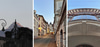
You know the name Évian, of course—who doesn’t. But you may not know the historic spa town of Évian-les-Bains. It sits on the shore of Lac Léman (Lake Geneva), the largest freshwater lake in Western Europe, which draws a gentle crescent along the border of France and Switzerland, anchored at one end by Geneva and at the other by Montreux. With the snow-capped peaks of the pre-Alps and, farther in the distance, the Alps surrounding it, the turquoise-blue expanse looks like something out of a fairy-tale. Évian-les-Bains, which sits at the center almost directly across from Lausanne, is smaller, quieter, and quainter than its Swiss neighbors. In many ways, the town feels like a bit of a throwback, with traces of its Belle Époque heyday in evidence everywhere you look, from the arches of an Art Deco building on the waterfront to the tiled design adorning the natural spring—source cachat—at the center of town (more on that later).
Courtesy of Andrea Hutton
Where to Stay
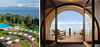
At the center of this nostalgia lies the Hôtel Royal, perched on a hill just above the town. Built in 1909 as a spa retreat and named in honor of Britain’s King Edward VII, the palatial resort has a storied history, having played host to everyone from Proust to Rita Hayworth, Prince Aga Khan III to Ringo Starr. Walk into the lobby and you are met with a gorgeous light-filled space, polished white marble floors, towering frescoed ceilings, an enormous crystal chandelier, plush seating areas, and extravagant floral displays. Just next to the reception desk is a wrought-iron-and-glass-encased elevator in which you can scale the six-story building with 360-degree views as you ascend. The lobby gives way to a series of lounges, and, just outside, a terrace and a rolling green expanse overlooking the lake. Take some time to wander throughout the hotel and you’ll discover paintings, photographs, etchings, sculptures, and objets—an Antoni Tàpies here, a Marco del Re there.
The rooms are spacious and comfortable, clad in Carrara marble and restored woods, with plush upholstered seating and the kind of beds that seem to envelop you and carry you smoothly off to sleep the moment you crawl under the covers. The bathrooms are also spacious, outfitted in marble with deep soaking tubs and thick toweling and robes. If you can, book a room with a lake view and, if you want to splurge, a terrace—it’s beautiful any time of day, but in the evening, as blue hour settles over the lake and the mountains glow pink in the distance, it’s magic.
Courtesy of Edouard Guibaud/Hôtel Royal Évian; Gaudin Ramet/Hôtel Royal Évian
The Water
We can’t talk about Évian without talking about the water—les bains are the reason the hotel exists. But to really understand the water, you’ll want to take a trip out of town, up toward the mountains through the Plateau de Gavot. The nearly 33-acre expanse is stunning: dotted with rustic villages, pastures, and lush marshlands, with biking and hiking trails to explore and, above it, peaks to climb. But what’s noteworthy about the plateau is the way that, sitting above the town at the feet of the Chablais pre-Alps, it acts as an enormous natural filter, purifying the natural spring water that made Évian-les-Bains famous. I was told that it takes more than 15 years for the water melting off the mountains to pass through the plateau, shedding contaminants and acquiring minerals as it goes.
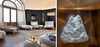
At the hotel, you are spoiled for choice of ways to enjoy the result of this journey: You can drink it (there are both flat and sparkling varieties, the latter of which I’d never seen before—consider this my petition to make it available stateside). You can mist it onto your skin. You’ll, of course, shower and bathe in it. But to really appreciate it, make time for the spa, where there’s a series of pools, saunas, steam rooms, and even a snow room (the snow is manufactured on site from the spring water), with which you can design your own contrast-therapy route.
There is also a full roster of treatments: The spa menu is, admittedly, a bit overwrought, designed around the water’s life cycle and broken out into four “dimensions.” But the treatments themselves are divine, ranging from massages and body scrubs to hydrotherapy and an array of facials (if you must choose just one, get the Harmonie Sublime massage). There are even treatments designed specifically for children, like an infant massage or a starter facial set to the soundtrack of a fairy tale (aptly named The Fairytale).
Courtesy of G. Gardette/Hôtel Royal Évian; Edouard Guibaud/Hôtel Royal Évian
Where to Eat
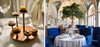
Hôtel Royal is a sprawling resort, and there’s no shortage of dining options. The standout, by far, is Les Fresques, the Michelin-starred restaurant helmed by chef Yohan Fatela (who succeeded Patrice Vander this March). It is named for the Gustave Jaulmes frescoes that cover its walls: pastoral scenes done in a palette of soft greens and blues. The menu draws heavily on local Savoyard ingredients—lake fish, alpine herbs, seasonal produce; you can order à la carte or choose a discovery menu (of which there is an excellent vegetarian option as well). And it is everything you hope for in a Michelin-starred meal: artful presentation, exquisite service, and transportive flavors. There’s also a stellar wine program—whether you order à la carte or the set menu, let the sommelier pair your courses; you won’t regret it. Beyond Les Fresques, there’s La Véranda, which serves breakfast and lunch; the former is an epic buffet spread, with a full complement of breads, pastries, cheeses, meats, eggs, butters, jams, local honey, fruits, and more. And if you’re willing to go farther afield, there are some lovely options in town: Umberto, next to the casino, serves excellent Italian (you’ll want to try one of the Neapolitan-style pies, several of which are topped with a ball of burrata: incredible). And the Terasse du Baron has views of the lake and serves classic French fare (think trout amandine, paté de foie gras, and the like).
Courtesy of Andrea Hutton; Pascal Raynaud/Hôtel Royal Évian
Where to Explore
Spend some time aimlessly wandering the town—both the streets themselves and the promenade along the waterfront (which is also excellent for a morning run, if that's your thing). There’s an antique store (Chateau de Fonbonne) that you won’t want to miss—the small space is brimming with everything from oil paintings to Louis IV chests to smaller curios and jewelry. Continue walking along the street that faces the waterfront, and you’ll find the Palais Lumière, an imposing 1902 building that was originally a hydrotherapy institute and is now a museum. And a little farther on, there’s the 13th-century Église-de-Notre-Dame-de-l’Assomption, a beautiful Gothic church with 15th-century choir stalls and a beautifully decorated pipe organ.
If you are there on Tuesday or Friday morning, the market is in town, with stalls of local produce, Savoyard cheese in wheels and wedges, cured meats, olives, breads, and pastries, along with some local crafts and nonedible goods.
You will also want to make a pilgrimage to the Source Cachat. Originally known as St. Catherine’s fountain, the spring is now centered in a columned 1903 Art Nouveau pavilion, with the fountain itself placed in an intricately tiled wall. The water flows freely—bring your water bottle and help yourself.
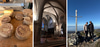
Finally, if you can make time for a day in the mountains, hike up from the Plateau de Gavot through alpine meadows and craggy peaks. As you climb, you’ll be able to spot Mont Blanc in the distance in one direction and, in the other direction, a panoramic view of the lake and Switzerland on the far shore. It’s breathtaking.
Courtesy of Andrea Hutton
In My Beauty Bag


