The Luxurious Alpine Retreat Where Wellness Starts With the (Epic) Views
Photos courtesy of FORESTIS and the author
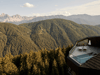
“It looks like an Apple desktop background,” I found myself repeating daily during my stay at FORESTIS. And not by accident—everything, from the Tower suites’ floor-to-ceiling windows to the tiered, amphitheater-style restaurant, is oriented toward the sweeping views of the Dolomites.
Nestled in Italy’s South Tyrolean Alps, FORESTIS is set nearly 6,000 feet above sea level, on the southern slope of Mount Plose, surrounded by dense forest. It’s not a place you choose for easy access from the U.S.—it’s a three-and-a-half-hour drive from the Munich and Milan airports, up winding mountain roads. But once you arrive at this alpine sanctuary, you start to breathe easier (literally).
Again, no accident: the site was chosen by the Austrian monarchy in 1912 to establish a tuberculosis sanatorium. More than a century later, those defining healing elements—pure spring water, fresh mountain air, and a mild, sunny climate—remain central pillars at FORESTIS. Now, with its modern expansion, world-class spa, and fine-dining restaurants, it has evolved into a true luxury wellness destination—one we imagine the Austrian royals would have approved of. (It made our 2025 goop list of the most exceptional hotels.)
The Hotel
The sanatorium never opened due to World War I, but in 2000, South Tyrolean hotelier Alois Hinteregger stumbled upon the abandoned property while hiking. He first opened it as a hotel in 2009, and after an ambitious eight-year redevelopment led by his son Stefan and partner Teresa Unterthiner, the property reopened in its current form as FORESTIS in 2020.
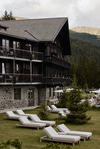
Designed by Brixen-based architect Armin Sader, the original historic wooden building now sits in striking contrast to three structural towers glass-and-steel towers inspired by the shape of tree trunks.
The design is minimalist, seamlessly integrating locally sourced natural materials—spruce-lined walls and dolomite stone that runs throughout nearly every space, from the bathtubs to the pool and spa. The architecture is also carbon-neutral: for every tree felled during construction, two have since been planted.
The result is a cozy yet contemporary sanctuary that invites you to stay put—though its location, steps from a network of hiking trails and ski slopes, makes it equally appealing for year-round exploration.
The Rooms
There are 62 guest suites at FORESTIS, divided between the historic building and three towers, each crowned with a penthouse suite with an open fireplace, a private spruce wood sauna, and a private pool on the upper deck.
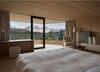
My Tower Suite was pared-back, with simple white bedding and no artwork on the walls, allowing the floor-to-ceiling windows to frame the real focal point: the view. The terrace, complete with a daybed, was the perfect place to watch the light move across the mountain peaks, or to take an afternoon nap—after all, the combination of mild temperature and high altitude is said to create a “pleasant tiredness.”
Still, the details are thoughtfully considered. The bathrooms have heated floors and towel racks and the bed is made with two separate duvets. (I’d written about the Scandinavian sleep method before but had never experienced it firsthand and can now confirm it genuinely makes a difference when sharing a bed.)
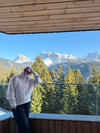

The chunky, made-in-Italy wool-cashmere "Dolomites" sweater was an obvious choice.
The Spa and Wellness
Beneath the three towers lies the true star of FORESTIS: The spa, spanning two floors and 2,000 square meters. Upon entering, you’re greeted by a heated indoor-outdoor pool, again complete with sweeping views of the Dolomites. There’s a brine steam bath, a cold plunge, and four Finnish saunas—one of which is located outside in a traditional South Tyrolean wooden house. And next to it, you’ll find another cold plunge: a wooden basin continuously filled with ice-cold glacial water from Mount Plose. (I took a “gentler” approach and stayed in for just a few seconds.)
While you’re free to move between contrast therapy suites at your own pace throughout the day, the spa also offers complimentary programming. This includes sound healing sessions in the Silent Room (another perfect place to nap), guided sauna rituals incorporating essential oils and traditional towel techniques, and a “mountain peeling,” body treatment in the steam room—an invigorating full-body exfoliation with scrubs made from local mountain pine.
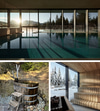
Photos Courtesy of Konstantin Volkmar/FORESTIS and the author
Upstairs, the spa treatments are rooted in ancestral Celtic traditions. I opted for the healing wood treatment, a massage that began with smelling and touching four types of native trees—mountain pine, spruce, larch and Swiss stone pine—before selecting the one that would be used in my massage, alongside a bespoke pressure technique.
Beyond the spa, FORESTIS offers a comprehensive program of activities designed to reconnect you with the landscape, including guided hiking and biking excursions that are popular with travelers in the summer. In the winter, there’s ski-in ski-out access from the ski room, so you can reach the Plose slopes in moments. Non-skiiers can sign up for a snowshoe hike to explore the snowy trails around the property.
The fitness center is equipped with a state-of-the-art Technogym and offers daily Pilates and stretching classes. At FORESTIS, you’ll also frequently hear the term “Wyda”—a holistic Celtic movement practice focused on breath, grounding, and energy flow. For example, you can sign up for a guided Wyda Walk to explore the local trails or join a Wyda meditation session to deepen your connection with nature.
You can also embark on a self-guided nature walk on the trails just a few steps beyond the property’s gates. After a travel day, we hiked to a tiny church tucked away in the woods and took a peaceful moment to reflect and connect with the surroundings—still snowy, yet warm enough that we didn’t need our winter coats.
My Dolomites Packing List
 GWYNMadden Sweater$1095.00shop now
This Italian cashmere sweater jacket is the ideal cozy layer to slip on before heading down for breakfast.
 goop BeautyGwyneth’s Travel Toolkit$361.00shop now
My goop Beauty essentials—including eye masks to look instantly more awake after a red-eye flight.
 TherabodyTheraface Depuffing Wand$169.99shop now
Perfect for pairing with said eye masks, this cold-to-hot depuffing wand is always in my carry-on.
 LidoDue One-Piece$345.00shop now
A made-in-Italy one-piece for days spent bopping between the indoor and outdoor pools.
 SalomonSalomon XT-6 Sneakers$185shop now
A hiking sneaker or boot (depending on the season) is essential for exploring the hiking trails around the property.

The Food and Drink
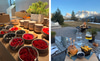
Mornings at FORESTIS start at your assigned table in the Main Restaurant, where the curved booths make you feel like you’re the only ones taking in the day’s new view of the Dolomites. I’ve been dreaming of the breakfast buffet ever since I left, especially the locally foraged berries, glistening house-made croissants, and fresh-pressed orange juice—hands down, the best I’ve ever tasted. (The juice room, with its perfectly arranged fruits and vegetables, looked straight out of a Kardashian’s kitchen.)
The cuisine at FORESTIS draws heavily on the traditional culinary practices of South Tyrol, which blends alpine and northern Italian influences. In our cooking class—a true highlight of the trip—we made cozy, flavorful traditional dishes like wholemeal spätzle with leek and truffle, beetroot dumplings, and Südtiroler Schlutzkrapfen, a stuffed pasta similar to ravioli.
Executive Chef Roland Lamprecht, who grew up in the area, is renowned for his “forest cuisine,” which focuses on ingredients from the surrounding forests. For dinner, his multi-course tasting menu changes daily, featuring seasonal ingredients highlighting the restaurants commitment to sustainability. Local wines are beautifully paired with each course—and while it might just be placebo, I found they magically didn't give me the same acid reflux I get at home. When you’re in the mood for something more casual, like a burger or simple pasta dish, the Garden Dining Restaurant offers an à la carte menu—which you can also enjoy outside on a sunny afternoon.
Then there’s YERA, the fine-dining restaurant nestled within a mountain cave. Inspired by Celtic harvest traditions (YERA means “harvest” in Celtic, as my invitation tells me), dining here is an immersive, ceremonial experience. Part of the ritual: At breakfast, you receive an invitation for the evening, requesting that you leave your phone and cameras behind, to “match the spirit of the holistic experience” and you’re led to dinner by a guide carrying a torch.
Once you arrive in the circular dining room, which seats just 17 guests at tables made from tree trunks, a wood-burning fire takes center stage, creating a theatrical atmosphere as each course is meticulously prepared in front of you. Every dish is paired with homemade low-alcohol fermented liquor—one course featured beer served in beeswax cups, which our server explained would be returned to the local beekeeper to be melted down into candles. When I visited in March, it was fermenting season—a meticulous endeavor we witnessed firsthand on a tour of the basement, where the restaurant’s meticulous preservation techniques take place.