
Ask me about any day or time period in my life, going back as far as elementary school, and I can tell you what my mindset was in regard to the way I was eating. Wondering if I could exist on frozen yogurt and salad as a teenager, then strictly focused on points value while attending Weight Watchers meetings on and off for a decade. Exhilarated by the high of a juice cleanse, then acceptance that a week of liquids was not going to solve all my problems. Concentrating on protein and fiber, then intuitive eating, then giving up. In between, binges. So. Many. Binges.
A Lifetime of Thoughts About Food
In my late 20s and early 30s, I worked with the fantastic nutritionist Brooke Alpert to unsubscribe from so many of the destructive patterns I had around diet culture. Then I got pregnant and experienced a freedom around food I had never known. I was supposed to eat now. I made a bucket list of foods I would normally never let myself enjoy and ate every single one, all over New York City, for nine months. It was as delicious as it sounds. Then I restricted myself right back to where I started.
Every birthday would arrive and I would say to myself, “I can’t believe I’m X years old and still dealing with this shit.” But I was.
Thoughts about food have filled every crack and crevice that has been open for them to spill into. Their constant presence has enrolled me in an advanced placement mental math seminar I never signed up for: calculating how I was going to make it through a day without overeating, balancing the sugar from the night before with vegetables and then more sugar, or contemplating how I might handle eating in various social situations without access to exactly what may or may not satisfy me in the moment.
On countless occasions, I have sat at a dinner table not focused on the people I’m with or the conversation but whether I was going to have more French fries. You would not believe how long this debate could go on for. Actually, I’ll tell you: however long it takes for the plate to be cleared from the table.
Though I have long since broken up with the scale, I still have jeans that signal success and a mental image of myself that doesn’t always match up with reality. Surely one could point to the patriarchy, or the influence of Kate Moss and Snackwell cookies, or a society that rewards women for being as small as possible as the undercurrent or the propeller. The frustration is not with my body but with the conditions that have caused me to think so very much about it. This is the operating system I’ve been working with, try as I might to reboot. I can either place the blame, or I can contend with its reality.

Photo courtesy of Jason Lowrie
I didn’t hear the term “food noise” until Ozempic became popular around four years ago, but it landed with a sonic boom because it perfectly described what it’s like in my brain all the time. What these thoughts about food have taken up more than anything else is space. All-consuming, ever-present, relentless space.
I used to say I wished I had the relationship with food that I do with alcohol. I enjoy alcohol occasionally and don’t spend much time thinking about it. I also used to say that if my brain were not consumed with thoughts about food, I could probably be president by now. In the last six months, one of those wishes has come true, and the other I’ve long since rewritten.
So that sets the stage for me and food noise, up until July of 2025.
When the GLP-1 Conversation Became Personal
But even as food has been a captor, it has also given me a deep sense of pleasure. Getting to spend the day at the stove with my sister is something I crave all the time. My kids started in the kitchen by pressing on the salad spinner as toddlers and have advanced to making homemade pasta and basting a steak like it’s nothing. They are far more natural in the kitchen than I am: My older son jokes that measuring is for losers, and my younger son has prepared potatoes 32 different ways and counting. Cooking is connection, meditation, and doing it with and for people I love is my greatest joy.
And lately, I’ve been able to do it with a clear head and greatly diminished thoughts about food.
Here’s what happened: Even though I wrote about the aesthetic implications of GLP-1s early on, I never really considered taking one myself because I was not clinically overweight and didn’t have diabetes. I didn’t want to take medication away from people who genuinely needed it, and I didn’t want to become reliant on a drug I may not always be able to access or afford. Plus, even if a GLP-1 could help with this concept of food noise, I felt strongly that I needed to heal my own food issues myself.
So in 2024, as GLP-1 use and the cottage industry that now surrounds it grew, I signed up for an online course about finding “food freedom.” I learned about something called “the Hunger Scale,” attended group Zoom meetings with a convincing-on-Instagram dietitian I’d never met in person and...that was pretty much it. I wanted to trust myself around food all the time, but I just didn’t. Not for any prolonged period, anyway. It was not for lack of trying. And trying.
It wasn’t until I started to consider how to handle brand-new symptoms—brain fog, itchy skin, lack of focus, bouts of depression, new periods of anxiety, and wild mood swings—that I wondered who, exactly, I was helping by abstaining completely from any intervention. Especially since everything now felt harder. It was harder to get up, harder to work, harder to work out, harder to focus. Sure, it was probably connected to perimenopause, which my gynecologist confirmed, but maybe it was also a lifetime of food issues, stress, not getting enough sleep, and certainly not eating enough protein. I’m generally terrible at asking others for help, and apparently this logic extended not just to people but to prescription medication.
To my existing doctors, I was more or less a picture of health. But if that was true, why did I feel so meh most of the time?
A Visit to a Concierge Longevity Doctor
I was finally fed up enough to do something about the way I was feeling. Vegetables and yoga weren’t going to cut it. I went to see internist and longevity expert Amanda Kahn, MD.
Kahn has become the longevity doctor for a set of largely female New Yorkers who are unwilling to accept meh. Jennifer Fisher and Dani Stahl are patients, plus I had several friends who swore by her. Still, I approached our first visit with trepidation, viewing it more as a conversation than a commitment to go all in.
My story was familiar to her. She posited that though I seemed to be a healthy-on-paper woman who exhibits no obvious signs of illness, I likely had elevated stress and wacky hormone levels, and who knows what else. Blood tests would have to be done.
Kahn calls her approach “bio-harmonizing,” working with her patients’ ever-changing and ever-aging bodies and minds to optimize function and perhaps help them feel better than they ever have before. What I appreciated about her is a proactive approach focused on blood tests, yes, but also symptoms, rather than the insurance company guidelines indicating that my numbers were exactly where they needed to be.
It’s a tricky time to be a longevity doctor. Everyone wants a piece of the industry, but no one agrees on exactly what it is, and there are experts with varying medical backgrounds applying the word to their practices with little oversight or clarity on what it means. Some of what is classified as longevity is really just basic health habits (sleep, healthy eating, exercise, etc.) being reinforced anew. But then there are the peptides...and injectable molecules that purport to do pretty much everything but wash your face at night.
Kahn is a board-certified doctor who went to med school at Weill Cornell. During COVID, she worked on the front lines in the heart failure unit in Philadelphia at Jefferson Medical Center and Penn Medicine.. Longevity is a more recent pursuit. Still, demand for her services is high, and it doesn't come cheap ($2,500 per month with a six-month minimum, and that fee doesn't include medication or supplements).
Upon reviewing my blood work, Kahn noted that my cortisol levels were elevated, which was not surprising, given that she called them “New York normal.” Kahn said that “in the absence of getting off the grid and moving to a farm,” meaningfully lowering stress would be a challenge, even with yoga three times a week. But almost everything else could be addressed. Here’s what she prescribed.
The Protocol
- SUPPLEMENTS: I had never stuck to a supplement regimen before, but over 12 bottles of Pure Encapsulations pills later, I was willing to try. Some were obvious: addressing vitamin D and zinc imbalances, and improving general health with a multivitamin, amino acids, CoQ10, and collagen. She prescribed a few supplements for cellular longevity and hormone support, such as NR-Longevity, NAC, and DHEA, as well as the NAD+ precursor NMN.
- NAD+: A weekly injection to improve energy and cognition ($65 per shot).
- GLUTATHIONE: A weekly $40 injection with many antioxidant benefits, including immunity and DNA repair.
- HORMONES: As referred to above, I was prescribed hormones (a low-dose estradiol patch and progesterone) based on symptoms rather than my estrogen levels, which were quite low but not indicative of a true trend because they fluctuate so much over the course of the month.
- IRON INFUSION: I’ve always had extremely low, almost-anemic iron levels. These were first treated with a supplement, but when that didn’t yield much change, Dr. Kahn sent me to hematologist Rachel Kramer. Upon meeting me and asking whether I bruise easily, have heavy periods, and get easily winded even when in good physical shape, Dr. Kramer stated that I probably should’ve been seeing her my whole adult life. Better late than never! Iron infusions were now a part of my routine.
- GLP-1: A weekly injection of tirzepatide with vitamin B for food noise, weight management, and an overall decrease in inflammation. The dose is considered a microdose, but the effect has been major. This is where things entered the change-your-life phase. Kahn prefers tirzepatides (i.e., Zepbound) over semaglutides (i.e. Ozempic) because they “specifically target fat, providing better results while protecting muscle and promoting improved body definition.” Cost: $300 to $400 per month for 20 milligrams.
- PROTEIN AND MOVEMENT: I added a weekly sculpt class to my hot yoga, increased my grilled chicken and cottage cheese intake, and got familiar with free weights again.
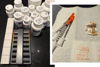
Jamie's supplements and weekly shots
While it is hard to pinpoint the effect of each individual supplement and injection, it has been way simpler to identify the effect of a low-dose GLP-1. Pretty much immediately, I felt...better. Satisfied. I never had nausea, or stomach pain. The pressurized thought or negotiation left the building.
What Changed
At the six-week mark, I wrote this to Kahn: “The amount of brain space that has been cleared is hard to explain. I am just...okay with eating less. This sounds like something obvious, but it is revolutionary. Surely, you’ve heard this story before in the last few years, but it’s still shocking when it’s you. The amount of mental math that has flown out of my brain is astonishing.”
At around the three-month mark, I started to feel like myself again. It was like I got rebooted to an earlier state, one where I was able to handle stress better and think clearly without thoughts of food intruding. It’s made me realize how much fun and lightness I’ve missed out on, how much time I wasted calculating my every move.
Over seven months in, I now feel like a version of myself I’ve always wanted to know. Yes, I’ve lost weight, and it’s much more fun getting dressed when everything in your closet fits. And yes, my energy and focus are elevated and even, and I have a greater capacity to handle discomfort and stress. But more than anything else, there is space. Space to think of other things, to become more curious, to engage with the world in a different way. It has changed my life. And it has been a gift.
The novelty has not worn off, and I’m less inclined to examine this new cerebral state than I am to enjoy it and soak in its ease.
Am I tricking my brain and my body? Absolutely. One thing I understand, despite the ways the GLP-1 medications are being tinkered with now, is that they’re not meant to be temporary. I am under no illusion that I’m done with them, though I am currently stretching out my dose from weekly to biweekly. I foresee them to be a part of my life, possibly forever. And there are many other benefits, as we are learning that they impact much more than weight and food noise: namely overall inflammation and reduced heart disease risk.
If I’m being honest, I’m nervous. I don’t know what the long tail of this looks like. I am scared the food noise will come back even while I'm still taking the GLP-1. I’m grateful, and I know I’m not alone. This all feels right for me right now, but I have no doubt things will change again, and I’ll shift again. As long as they keep moving.
Jamie Rosen is a writer, editor, and founder of Office of the Surface.
@jamierosennyc | Substack