.png)
While you might not remember the name of the shampoo you used as a kid, you’d probably recognize it if you smelled it. That’s because your nose is a consummate notetaker.
“You can choose to cover your eyes or wear earplugs, but as long as you’re breathing, you’re smelling,” says Arnaud Winter, Senior Perfumer at Cosmo International Fragrances. “So there’s always a connection to our olfactory sense.”
Knowing that your nose is always on is more than a fun fact, however. “It’s a powerful tool for mood modulation,” says Charles Spence, Ph.D., professor of experimental psychology at the University of Oxford.
Much of the time, though, we don’t realize we’re smelling anything because the scent is subtle or we’ve become so accustomed to it that it no longer registers on a conscious level (which explains why you can’t detect the smell of your own home but others can). “We think it’s not having an impact,” Spence says.
Oh, but it is. Researchers have been documenting scent’s effects on mood and performance for decades, and the findings are hard to ignore. In a 2005 study published in Psychological Science, participants who were unwittingly exposed to citrus-scented cleaning spray kept their immediate environment measurably cleaner while eating; when asked about it afterward, they had no idea the scent had influenced them at all. In another study, lavender (long associated with calm and sleep) lived up to its reputation and then some. Forty adults were exposed to it for three minutes while researchers tracked their brain waves via an electroencephalogram (EEG), their mood, and their math performance. Lavender’s calming effect on the subjects wasn’t surprising. What was surprising was that, possibly because they were more relaxed, the subjects also did their math faster and more accurately.
“Your smell receptors in your nose are actually part of your brain...It’s only about two or three synapses from there to the areas governing emotion and memory. —Charles Spence, Ph.D.”
The reason scent impacts us so profoundly is rooted in neurology. “Your smell receptors in your nose are actually part of your brain—they’re brain tissue hanging out in your head,” Spence explains. “It’s only about two or three synapses from there to the areas governing emotion and memory.” Every other sense travels first through the thalamus, the brain’s central relay station, before reaching those areas. Smell skips that stop entirely, which is why a fragrance can shift your mood before you’ve even consciously registered what you’re smelling.
But scientists are unsure whether it’s the scent itself or our learned response to it that’s doing the work. To wit, the primary active compound in lavender, known for being a relaxing scent, is linalool. But linalool is also found in citrus, which most people consider to be an energizing scent. So is it chemistry or our brain that’s calling the shots?
In the end, it doesn’t really matter. What does seem to matter is that “if you’re in a need state, scent may help,” Spence says. And when you make scent exposure a ritual, it becomes a reliable cue, something your brain learns to respond to on command.
So instead of searching for a one-size-fits-all formula, treat fragrance like a choose-your-own-adventure. Choose the scents that align with how you want to feel in the moment, then pay attention to how you respond to them. Over time, you’ll discover which fragrances—and even which layered combinations—become your go-to rituals. Here are a few places to start.
Morning Wake-Up Call
“In the morning, when you want energy and focus, you might start with ginger, lime leaf, or aromatic green notes,” which Winter says many of us associate with being pick-me-ups. In addition to having a scientifically well-documented “activating” effect, “ginger has a big trigeminal hit,” says Spence—meaning it stimulates not just your olfactory receptors but the nerve that registers sharp sensations, which is part of what makes it feel so instantly energizing.
Using a ginger-packed body wash in the shower can give you the zing you need to shift into high gear for the day. But so can sniffing raw ingredients, like grated ginger, or even inhaling deeply over a steaming mug of ginger tea.
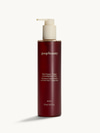 goop beautyBlack Pepper + Ginger Grounding Body Wash$38.00shop now
This gender-neutral wash includes black pepper and ginger root, which can help perk you up.
 FischersundÚTILYKT Spray - 66°Norður x Fischersund$220.00shop now
Forget caffeine; with a mix of aromatic green notes, including moss and fresh-cut grass, this mist might just become your new morning must-have.
Mid-Morning Confidence Boost
“By the time you’re getting to work, you want to feel confident and powerful. Perhaps you even have a presentation to give, so you need something that makes you feel self-assured,” Winter says. He suggests reaching for vanilla or tuberose—key accords of Obsession and Poison, respectively, some of the biggest power perfumes of the Working Girl-era ‘80s, incidentally. (Lest you worry about overpowering your colleagues with the scent of vanilla, it’s one of the most universally comforting scents because it reminds us of amniotic fluid and breast milk.)
Consider stopping to smell the roses, literally, if there are any on your path to work. In fact, sniffing fresh-cut blooms is one tactic Jonathan Keren, CEO and founder of Vacanza fragrances (which were developed to have a transportive effect), uses to boost his mood.
 Maison Louis MarieNo.15 Vanille Infinie Perfume Oil$65.00shop now
Consider this roll-on vanilla oil liquid courage; dab it onto pulse points before heading into a meeting or pleading your case for a raise.
 vitruviThe Warm Vanilla Air Diffuser Kit$165.00shop now
Leave this vanilla-scented waterless diffuser on your desk to create a comforting ritual that helps you feel confident and centered throughout the day.
After-Lunch Energy Booster
If your head is bobbing in meetings by mid-afternoon, try citrus, which Keren says is largely associated with feeling invigorated. For example, a Japanese car factory introduced a lemon scent on the factory floor and reported a significant increase in productivity alongside a reduction in accidents, according to research cited by Spence in his 2020 paper, published in Frontiers in Psychology.
But even a simple twist of lemon or grapefruit can act as the adult version of a scratch-and-sniff sticker, Keren says. (Incidentally, if this is the time of day you tend to reach into the chocolate drawer, there’s research to suggest that “fruit smells, like melon, might lead you to healthier food choices,” Spence says.)
 Maison Louis MarieNo.13 Nouvelle Vague Candle$40.00shop now
Get your head back in the game by lighting this lemon-scented candle inspired by the island of Capri.
 VyraoLudeaux Eau de Parfum$190.00shop now
With notes of milky peach, this EDP may become the fastest way to get your afternoon sweets fix.
Clock-Out Cue
Churches have used scent to signal that a space is sacred for years, says Spence. Similarly, “You can think about demarcating your own home by smell.” That is, find a scent that you like and use it to trigger your mind to make the shift from office to home mode (or, if you work from a home office, from that room to another). This should be a scent you find pleasing, which will differ from person to person, but may include woody notes, such as sandalwood or cedarwood, which Keren says can be grounding. A spritz of a home fragrance or lighting a candle could have the same effect.
- goop beautyBlack Pepper and Ginger Grounding Body Wash$38.00shop now
Don't relegate this body wash to your morning shower. Its grounding notes, including sandalwood, make it just as fitting for a post-work (or post-workout) shower.
 Sangre de FrutaGarden of Earthly Delights Hand and Body Lotion$93.00shop now
This hand and body lotion leaves a subtle trail of cedar, sandalwood, and bergamot—ideal for marking the transition from work mode to home mode.
Nighttime Wind-Down
Here’s where it all comes back to lavender, which, as Spence says in his paper, is one of the most thoroughly researched sleep scents. However, he notes that there are at least 45 species and 450 varieties of lavender, and that many academic studies don’t specify which type they used. Regardless, many of us have come to associate sleep with the aroma of lavender.
Lighting a lavender-scented candle, soaking in a lavender-laced bath, or spritzing a lavender-tinged linen spray onto your pillowcase may be the most effortless off switch you own.
 Kate McLeodSleep Pebble$42.00shop now
Drop one in a warm bath—the gentle lavender scent will help you unwind while leaving your skin silky soft.
 Tammy FenderBulgarian Lavender Body Oil$75.00shop now
Massaging this oil onto dry patches can help take the rough edges off the day, too.
 vitruviSleep Essential Oil Blend$32.99shop now
Keep this one on your nightstand and inhale deeply to help lull yourself to sleep.