The Treatments Women Are Using to Save Their Sex Lives After Menopause

Flower of Life II, 1925, 1918 by Georgia O'Keeffe
When bestselling author and podcast host Elena Brower entered menopause a few years ago, she assumed the changes happening in her body were simply part of aging: the dryness, the discomfort during sex, the strange sense that a once-familiar part of herself had become fragile and unpredictable.
Like many women, Brower had internalized the idea that midlife meant quietly lowering expectations—not just around sex, but around comfort itself.
“If you have a doctor who’s paying attention to the latest science, you know systemic hormones can be extremely helpful in menopause,” Brower tells goop. “What I didn’t understand initially was that tending specifically to vaginal tissue could make such a dramatic difference.”
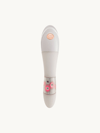
Under the guidance of double board-certified OB-GYN Sarah de la Torre, MD, Brower began a conservative treatment plan centered on localized hormone therapy and the Joylux VFit red light device. Within weeks, she says she noticed improved lubrication, less discomfort, and a renewed sense of bodily ease.
“You know, we’re told that at a certain point this is just the way it is,” Brower says. “That your attention should move away from sex and toward mind and spirit. I think these treatments are challenging that idea.”
Over the last several years, an exploding category broadly marketed as “vaginal rejuvenation” has moved from the margins of cosmetic medicine into the wellness mainstream. What was once whispered about in plastic surgery offices is now discussed openly in menopause clinics, dermatology practices, OB-GYN offices, med spas, podcasts, and increasingly, on social media.
The category itself is sprawling and often confusing. It encompasses everything from evidence-based treatments like vaginal estrogen and pelvic floor physical therapy to buzzy energy devices, PRP injections, radiofrequency treatments, fillers, surgical lifts, and at-home red light tools promising tighter tissue, stronger orgasms, and “rejuvenation.”
Some interventions are medically useful. Some are probably overmarketed. Some sit somewhere in between.
And that ambiguity is part of what makes the category so difficult for patients to navigate.
“There’s no single medical definition of vaginal rejuvenation,” says board-certified gynecologist Maral Malekzadeh, DO, MS. “It’s really an umbrella term that’s used to describe a wide range of interventions.”
That distinction matters because while the phrase suggests a cosmetic luxury, many women seeking treatment are dealing with legitimate medical symptoms: vaginal dryness, painful intercourse, urinary leakage, pelvic floor dysfunction, or tissue changes related to childbirth, breast cancer treatment, or menopause.
“These are changes that happen over time,” says Malekzadeh. “They can be related to age, but also postpartum shifts, medications, birth control, and cancer treatment. It’s not only menopause.”
“There’s no single medical definition of vaginal rejuvenation. It’s really an umbrella term that’s used to describe a wide range of interventions.—Maral Malekzadeh, DO, MS”
At the same time, physicians caution that the rapid commercialization of the category has outpaced both evidence and patient education.
In practice, most reputable physicians are not starting with lasers or injectable treatments. They begin with far less glamorous interventions: localized estrogen, topical DHEA, pelvic floor physical therapy, and exercises designed to restore tissue quality and muscular support.
“These approaches are still considered the gold standard,” says de la Torre. “They’re treating the underlying biology.”
That biological shift is real. Like skin elsewhere on the body, vulvovaginal tissue loses collagen, elastin, blood flow, and elasticity over time—particularly as estrogen declines during menopause. The result can be dryness, irritation, urinary symptoms, decreased sensation, and discomfort during sex.
But while those symptoms are common, doctors increasingly reject the idea that women should simply tolerate them.
“There’s still so much stigma around discussing this part of the body,” says double-board-certified plastic surgeon Cat Begovic, MD. “Our vaginas and vulvas deserve the same level of care, attention, and respect as any other part of the body. Women are often shocked to learn that there are treatments available.”
What remains less clear is where restorative medicine ends and aesthetic optimization begins.
That line has become increasingly blurry as anti-aging technologies once reserved for the face migrate into intimate medicine. Radiofrequency devices, fractional lasers, platelet-rich plasma injections, microneedling, exosomes, and hyaluronic acid fillers are now routinely marketed for vaginal tightening, collagen stimulation, enhanced orgasm, and improved appearance.
Some physicians believe certain technologies may genuinely help select patients—particularly those with mild tissue laxity or persistent symptoms not fully resolved with hormones alone. Others remain far more cautious, pointing to limited long-term data and aggressive marketing claims.
“There’s still so much stigma around discussing this part of the body. Our vaginas and vulvas deserve the same level of care, attention, and respect as any other part of the body. Women are often shocked to learn that there are treatments available.—Cat Begovic, MD”
In 2018, the FDA issued warnings to manufacturers marketing energy-based vaginal devices for “rejuvenation” and sexual enhancement without sufficient evidence supporting their safety or efficacy for those uses.
That hasn’t slowed consumer demand.
“Vaginal rejuvenation is extremely popular right now,” says Beverly Hills aesthetic surgeon Robert Dorfman, MD, who uses PRP, exosomes, filler, and microneedling in his practice.
But even physicians offering these treatments acknowledge that outcomes vary widely—and that the economics can quickly become staggering. A series of Emsella sessions can cost several thousand dollars. Laser packages often run between $1,500 and $3,000. Injectable treatments require ongoing maintenance. Most are not covered by insurance.
The result is a rapidly expanding category in which women are increasingly expected to privately finance the management of aging-related intimate health concerns—many of which previous generations were simply told to endure in silence.
For some patients, the investment feels transformative. For others, foundational treatments like estrogen and pelvic floor rehabilitation prove more effective than the expensive technologies marketed to replace them.
Which is why many experts argue the most important intervention may not be a device at all, but better education around what’s actually happening to the body in the first place.
What Doctors Recommend First
Despite the attention surrounding lasers and regenerative treatments, most physicians still begin with the least glamorous interventions: pelvic floor physical therapy and localized hormone treatment.
“These approaches are extremely effective and very well studied,” says Malekzadeh.
Localized estrogen creams, suppositories, and inserts help restore moisture, elasticity, blood flow, and tissue integrity in estrogen-depleted vaginal tissue. Unlike systemic hormone therapy, localized estrogen remains largely concentrated in the tissue itself and is often considered one of the safest and most effective treatments for genitourinary syndrome of menopause.
Pelvic floor physical therapy addresses another frequently overlooked issue: muscular dysfunction.
While Kegels are often casually recommended, many women either perform them incorrectly or have pelvic floor tension—not weakness—which can actually worsen symptoms. Pelvic floor therapists use targeted exercises, breathwork, biofeedback, and internal manual therapy to improve muscular coordination, bladder control, prolapse symptoms, and painful intercourse.
For many patients, experts say these foundational interventions provide substantial improvement without escalating into expensive procedures.
The Rise of Energy-Based Devices
Still, the market for noninvasive “rejuvenation” devices continues to expand rapidly.
One of the most popular categories includes energy-based treatments like vaginal lasers, radiofrequency devices, and electromagnetic pelvic floor chairs such as Emsella and Fotona StarFormer Pro.
The premise behind many of these treatments is relatively straightforward: controlled thermal or electromagnetic energy stimulates muscular contractions, blood flow, and collagen remodeling in vaginal or pelvic tissue.
Emsella, often described as a high-tech evolution of Kegels, uses high-intensity focused electromagnetic energy to trigger thousands of pelvic floor contractions during a single 20- to 30-minute session. Patients remain fully clothed while seated in the chair.
The treatments are primarily marketed for urinary incontinence and pelvic floor strengthening, though some clinics also promote improvements in sexual sensation.
Results can be meaningful for some patients, particularly those dealing with mild urinary leakage after childbirth or menopause. But physicians generally frame the devices as complementary tools rather than replacements for physical therapy.
The financial commitment can also be significant. A standard series of Emsella treatments often costs between $1,800 and $3,000, with maintenance sessions recommended every several months.
Laser-based treatments like FemiLift, FemTouch, diVa, and Votiva attempt to improve tissue quality by creating controlled thermal injury intended to stimulate collagen production and tissue remodeling.
Some patients report improvements in mild dryness, laxity, and discomfort. But long-term evidence remains limited, and experts remain divided over how effective the treatments truly are.
That uncertainty has fueled ongoing debate within gynecology and aesthetic medicine, particularly as marketing language surrounding “rejuvenation” often outpaces available data.
PRP, Fillers, and the Regenerative Medicine Boom
If lasers occupy the middle ground between medicine and aesthetics, regenerative injectables push even further into experimental territory.
Platelet-rich plasma therapy—often marketed as the “O-shot”—involves drawing a patient’s blood, isolating platelet-rich plasma, and reinjecting it into vulvovaginal tissue with the goal of improving blood flow, sensitivity, lubrication, and collagen production.
“The O-shot can help fortify the vaginal wall, build new collagen, and boost circulation,” says Dorfman.
The biological logic behind PRP is plausible. Platelets contain growth factors involved in tissue repair and wound healing. But while the treatment has become increasingly popular in both orthopedics and aesthetics, robust clinical evidence for vaginal applications remains limited.
Some physicians view PRP as promising. Others see it as emblematic of a broader wellness culture eager to commercialize regenerative medicine before the evidence fully catches up.
The same tension exists around vulvovaginal filler injections.
High-viscosity hyaluronic acid fillers are sometimes used to restore volume to the labia majora or improve hydration and comfort in estrogen-depleted tissue. But even physicians who offer filler treatments acknowledge that the anatomy is highly vascular and technically demanding.
“There are a lot of blood vessels in this area,” de la Torre says. “Just like with filler in the face, if filler enters a blood vessel, necrosis can occur.”
Cost is another factor. Depending on the amount of product used, vaginal filler treatments can range from roughly $1,500 to $6,000 and require ongoing maintenance.
For that reason, many physicians position injectable treatments as elective enhancements rather than foundational care.
When Surgery Makes Sense
For some patients, however, surgery—not devices—is ultimately the more appropriate intervention.
“One common misconception is that nonsurgical treatments can replace surgery in all cases,” says Begovic. “They’re great tools, but they have limitations.”
Procedures like labiaplasty, perineoplasty, and monsplasty are often grouped under the umbrella of “vaginal rejuvenation,” though technically they address vulvar and pelvic anatomy rather than the internal vaginal canal itself.
Labiaplasty, which reshapes or reduces the labia minora, remains one of the most commonly performed procedures in the category. While often framed as cosmetic, patients frequently seek surgery for functional reasons: discomfort during exercise, irritation from clothing, hygiene issues, or pain during sex.
Begovic says her patient population spans every age group, from postpartum women to menopausal patients to younger women experiencing discomfort related to anatomy.
“Labiaplasty removes and shapes the labia minora. Women also seek labiaplasty for asymmetry (one side is longer, thicker, or has a different shape from the other), as well as tears in childbirth or with trauma,” Begovic explains. The plastic surgeon’s proprietary labiaplasty technique results in a symmetrical, “tucked in, heart shape” aesthetic with a nearly invisible scar and a quick recovery. “For patients who have torn their perineum (the area between the vaginal opening and anus) in pregnancy or have developed scar tissue from the tear or from previous repair, I also perform perineoplasty at the same time as the labiaplasty.”
Perineoplasty, meanwhile, repairs and tightens the perineum, often after childbirth-related stretching or injury. Monsplasty—or pubic lift surgery—addresses sagging or fullness in the mons pubis, sometimes after pregnancy or major weight fluctuations.
“I make a horizontal incision in the pubic hairline, lift, tighten and remove excess skin in this area and suture it in place creating a flatter and tighter contour,” she explains, adding that, like labiaplasties, this procedure is often supplemented by radiofrequency tightening treatments to further improve results. “For patients who have excess fat of the mons pubis creating a bulge, I also liposuction the area to create a flat and tight contour,” she adds.
Unlike energy-based devices, surgical interventions can meaningfully alter anatomy. They also involve far more downtime, higher costs, and the usual surgical risks associated with healing, scarring, and patient expectations.
At-Home Treatments
At the lower-risk end of the spectrum sits a rapidly growing category of at-home products: pelvic floor trainers, red light devices, vaginal moisturizers, CBD oils, and hyaluronic acid gels.
Some are medically reasonable. Some drift closer to wellness theater.
Pelvic floor trainers can help patients engage the correct musculature more effectively than Kegels alone, particularly when paired with professional guidance. Hyaluronic acid vaginal moisturizers can also provide meaningful symptom relief for mild dryness and irritation, especially for women unable or unwilling to use hormones.


Red light therapy occupies a more ambiguous middle ground.
“Red light therapy is an amazing noninvasive treatment,” says de la Torre, who recommends the modality selectively for some patients.
The proposed mechanism is that low-level light therapy may stimulate circulation, collagen production, and tissue repair without creating thermal injury. Some small studies and biopsies have shown measurable tissue changes, though experts note the evidence base remains relatively early.
Unlike in-office procedures, however, at-home devices tend to require consistent long-term use—and results are typically subtle rather than dramatic.
That distinction is worth emphasizing because the language surrounding intimate wellness increasingly mirrors the promises once associated with anti-aging skincare: tighter, smoother, firmer, younger.
But aging tissue is not inherently pathological.
Which may be the central tension at the heart of the vaginal rejuvenation boom itself.
On one hand, many women are finally receiving treatment for symptoms that medicine historically minimized or ignored. Vaginal dryness, painful intercourse, incontinence, and pelvic floor dysfunction are real medical concerns that can meaningfully affect quality of life.
On the other hand, the explosive commercialization of intimate wellness has created a marketplace where menopause, postpartum recovery, and ordinary anatomical variation are increasingly positioned as conditions requiring ongoing optimization.
The result is a category suspended somewhere between medicine, aesthetics, empowerment, and consumerism—one that asks increasingly complicated questions about what it means to age in a culture that still struggles to tolerate female aging at all.