5 Smart Novels to Pack When You Want More Than a Beach Read
We cover things we're into and think you might be, too. If you purchase through an external link here, goop may earn a commission.

This literary lineup is for readers who want more than a simple escape—these are beautifully written, emotionally rich novels that transport you to a new world you can disappear into. Each of these books is the kind of beach read that invites long afternoons, intimate conversations, and a few “Wait, did you get to that part?” texts. Consider this your summer shelf of literary conversation starters—the books everyone will be talking about.
Maggie O'Farrell, Land
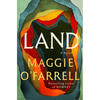
Maggie O’Farrell has a remarkable ability to make history feel immediate, intimate, and achingly alive, and Land is no exception. Set in Ireland in 1865, the novel follows Tomas and his ten-year-old son Liam as they work for the British Ordnance Survey, mapping a landscape still bearing the scars of the Great Hunger. When a disturbing encounter alters the course of their lives, the family is set on an unexpected journey that becomes both a reckoning with the past and a search for a different future.
Fans of Hamnet will find much to love here: O’Farrell’s luminous prose, meticulous historical detail, and deep compassion for ordinary people living through extraordinary circumstances. Inspired by her own family history, Land feels especially personal, weaving together themes of inheritance, belonging, and survival across generations. Richly atmospheric and emotionally immersive, it’s the kind of sweeping historical novel that rewards lingering over every page—ideal for readers who want their beach reads with emotional depth and literary heft.
Kathryn Stockett, The Calamity Club
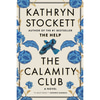
After the phenomenon of The Help, Kathryn Stockett returns with The Calamity Club, a big-hearted Southern saga about the unlikely bonds formed when life leaves women with very few choices. Set in 1933 Oxford, Mississippi, the novel follows 11-year-old Meg Lefleur, an “unadoptable” girl fighting to hold on to hope inside the Lafayette County Orphan Asylum; Birdie Calhoun, an unmarried woman who arrives in town hoping to save her struggling family; and Charlie, a fierce woman determined to reclaim her daughter. When their paths collide, the three women form an unexpected alliance and begin fighting back against the circumstances that have defined them.
Stockett’s greatest strength has always been her ability to create unforgettable characters, and The Calamity Club is filled with women who are funny, flawed, resilient, and impossible to forget. Beneath the historical setting and page-turning plot is a story about chosen family, friendship, and the courage it takes to challenge the roles society hands you. With its vivid Mississippi setting, emotional stakes, and deeply human characters, this is a perfect summer read for anyone who loves sweeping historical fiction with heart.
Elizabeth Strout, The Things We Never Say
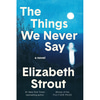
Elizabeth Strout returns with another quietly powerful novel about the invisible struggles hiding beneath ordinary lives. The Things We Never Say follows Artie Dam, a beloved high school history teacher in coastal Massachusetts who seems to have created the life everyone hopes for: a long marriage, a home by the water, a successful career, and a community that admires him. Yet a tragedy that reshaped his family years earlier still lingers beneath the surface, leaving Artie to wrestle with loneliness, regret, and the unsettling realization that even those closest to us remain partly unknowable.
As always, Strout’s brilliance lies in the quiet details—the small conversations, private regrets, and emotional truths that shape a lifetime. Through Artie’s marriage to Evie, his relationship with his son, Rob, and the friendships that sustain him, she explores parenthood, grief, forgiveness, and the courage it takes to finally say what we mean. Tender, wise, and deeply human, this is classic Strout: the kind of literary beach read that makes you slow down, look up from the page, and think differently about the people you love.
Andrew Sean Greer, Villa Coco
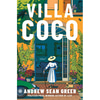
After winning the Pulitzer Prize for Less and returning with Less Is Lost, Andrew Sean Greer brings his signature charm, wit, and romantic sensibility to Villa Coco, a sun-drenched novel about reinvention, art, and the unexpected ways we find purpose. The story follows a young American who travels to rural Italy to work for Coco, an eccentric elderly baroness with a sprawling villa and an extraordinary art collection. As he catalogs her treasures and becomes drawn into her remarkable past, he finds himself swept into an unexpected journey shaped by memory, love, and the possibility of second chances.
With its Italian countryside setting, memorable characters, and Greer’s effortless humor, Villa Coco is the kind of novel that feels like a vacation in book form. Beneath the romance and beauty is a thoughtful exploration of aging, desire, memory, and the possibility of beginning again. A little mysterious, a little glamorous, and completely charming, it’s the literary equivalent of an Aperol spritz at golden hour—the perfect addition to a summer beach bag.
Ann Patchett, Whistler
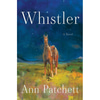
Ann Patchett has always excelled at finding the extraordinary in seemingly ordinary lives, and Whistler may be her most quietly devastating novel yet. The story begins at the Metropolitan Museum of Art, where Daphne Fuller, a 53-year-old English teacher, notices an elderly man following her through the galleries. The stranger turns out to be Eddie Triplett, her former stepfather, whom she hasn’t seen since he vanished from her life when she was nine years old. What follows is not a dramatic reckoning so much as a deeply human exploration of memory, longing, and the people who leave an imprint on us long after they’re gone.
Patchett wrote Whistler while processing the loss of a close friend, and that emotional undercurrent is felt on every page. As Daphne and Eddie reconnect, the novel gently probes questions of what we owe one another, how childhood shapes the adults we become, and how rare it is to be fully known by another person. While it has the propulsive quality of a reunion story, this is ultimately a contemplative novel best savored over a long afternoon, when you’re in the mood for a book that invites reflection as much as page-turning. Tender, wise, and deeply moving, Whistler is exactly the kind of literary escape that deserves a coveted spot on your summer reading list.
With additional reporting from Lulu Malik.