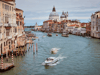
Jenni Helin/Stills.com
No one does Venetian opulence quite like Roberto Coin. The Italian jeweler’s designs are an ongoing dialogue with his hometown, and each new collection draws on the city’s art, architecture, and spirit. So it is fitting that to mark his eponymous brand’s 30th anniversary, Coin invited guests—300 of them, from around the world—to La Serenissima. The multiday celebration opened with cocktails on the private island of San Clemente; included a presentation of Coin’s newest (and largest ever) high jewelry collection, Meraviglia; and concluded with an extravagant black-tie gala and fireworks over the lagoon. It was a fitting tribute to both the man and his muse.

From left: Roberto Coin Cobra necklace, price upon request; the Meraviglia presentation; Roberto Coin Tiare necklace, price upon request.
Meraviglia (which translates to “wonder”) was unveiled inside a 12th-century church, and the hushed sanctuary made an apt setting for the display, which included 500 unique creations, each more jaw-dropping than the next. New interpretations of Coin’s Cobra collection—including a diamond-encrusted white gold necklace set with a 15.54-carat green tourmaline—sat alongside bestsellers from his signature collections (like Venetian Princess) and archival pieces from Appassionata, Animalier, Magnifica, and more. It was a breathtaking testament to the jeweler’s creativity and prolific body of work.
The celebrations ended with a Renaissance-inspired, sea-themed black-tie gala on the island of Lido, complete with operatic performances and dances courtesy of Antonia Sautter (the fashion designer, event planner, and artistic director of the city’s iconic Ballo del Doge). Coin is fond of saying that “if you understand Venice, you understand life.” And ultimately, that was his goal for the weekend—for his guests to understand Venice. “We are not selling jewelry,” he remarked as he took the stage at the start of the evening. “We are selling an experience.”

A Tour of Roberto Coin’s Venice
To ground you in the landscape that informs Coin’s designs, we put together a short walking tour that takes you to the corners of the city from which he’s drawn inspiration over the years. It starts—as any good day in Venice should—with a Bellini, and ends at Coin’s boutique on the Piazza San Marco. What you do from there…well, that’s up to you.
11 a.m. Opened by Giuseppe Cipriani in 1931, Harry’s Bar is a Venetian institution. Over the course of its storied history, it’s played host to everyone from Ernest Hemingway to Charlie Chaplin, Truman Capote to Peggy Guggenheim, and, of course, Roberto Coin. Get there when it opens at 11, claim a table in the front room, and order a round of Bellinis (they were invented here).
11:30 a.m. When you leave Harry’s, make your way along the waterfront past the Giardini Reali. Less secret than some of the city’s more secluded gardens, the Royal Gardens—which are connected to the Piazza San Marco by a drawbridge—are nonetheless worth a detour as you head to the Doge’s Palace.
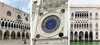
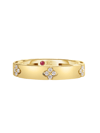
11:45 a.m. The sprawling Doge’s Palace that sits facing the lagoon dates back to the 14th century, though it sits on the site of an earlier structure, which was built in the 9th century when the capital was moved from Malamocco, on Lido, to Rialto. Built from pink Verona marble and white Istrian stone, the building rises above intricately carved and columned arcades, a masterpiece of Venetian Gothic architecture. Note the stylized four-petal diamond flowers along the top of the second-story arcade—it’s a motif that Coin has played with—to beautiful effect—in his Love in Verona collection.
As you’re standing in front of the Doge’s Palace on Piazzetta San Marco, look toward the water and you’ll notice two large granite columns, one of them topped with a winged lion. The bronze sculpture’s provenance is uncertain (though recent research published in the journal Antiquity suggests that it was originally made in China during the Tang Dynasty—and that it once had longer ears as well as horns), but it has stood atop the column since the 12th century and has long been known as the Lion of Venice (it’s also associated with the lion of St. Mark the Evangelist, the city’s patron saint). With its flowing mane and lithe pose, it calls to mind the magnificent creatures in Coin’s Animalier collection.
12 p.m. Make your way off the piazzetta into the grand Piazza San Marco. At its center is the Basilica, an enormous domed confection of a church dating to the 10th century (it stands on the site of two earlier churches, the first having been built to house the bones of St. Mark when they were spirited out of Alexandria and brought to Venice in 828 CE. The church—which was modeled on the Church of the Holy Apostles in Constantinople—borrows elements of Byzantine, Romanesque, and Islamic architecture. Take the time to get a ticket and go inside and you’ll see why it’s known as the Church of Gold: Seemingly every inch is intricately adorned, with over 85,000 square feet of exquisite mosaics, most of which are gilded in real gold leaf. Coin’s San Marco collection pays tribute to the landmark with its delicately nested swirls, many rendered in mixed metals and pavé diamonds.
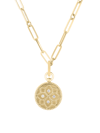
1:30 p.m. You’ll make your way back to St. Mark’s Square later, but for now you’re heading across the island. Walk through the arch at the base of the clock tower, and take a moment to look up at the sapphire-blue astrological clock (another of Coin’s inspirations—the hue is a reference throughout his Obelisco collection) and the winged lion sitting atop it. It’s about a 10-minute walk through the narrow streets and over the canals to the Corte del Milion in the Cannaregio neighborhood. These two secluded medieval courtyards (technically the Corte Prima del Milion and Corte Seconda del Milion) were home to Marco Polo and his family when the explorers returned from the Far East at the turn of the 14th century. Their home no longer stands, but many architectural elements from that time remain—there are ancient marble arches, stone carvings, and a medieval wellhead. If you look up, you’ll also notice a set of five patere; these ornamental medallions are a recurring motif throughout the city, and one that Coin nods to with his Venetian Medallions collection.
1:45 p.m. The next stop on your tour is best seen from the water, so head over to the Traghetto to Santa Sofia: The gondola ferry is a fast and easy way to cross the Grand Canal; it’s €2 for visitors and €0.70 for locals, but note that it only runs until 3 p.m. As you cross the water, look back at the magnificent Palazzo Santa Sofia, known as Ca’ d’Oro (House of Gold). The Venetian Gothic palace, with its intricate arches and quatrefoil details, was once covered in giltwork (hence the name). But it’s the Byzantine and Renaissance architectural details that served as inspiration for some of Coin’s most iconic collections, including Venetian Princess and Princess Flower.
2 p.m. Just a few minutes’ walk from the traghetto is the Rialto market—another Venetian icon. Wander a bit through the shops and stalls (a stop at Piedaterre for a pair of Venetian slippers is never a bad idea), making your way back across the bridge to the other side of the Grand Canal. It’s time now to make your way back to San Marco, which is easy to do if you simply follow the “Per San Marco” signs along the street. It’s just a 10-minute walk back to the square, where you’ll find Coin’s boutique on the south side, just a few doors down from Caffè Florian, a centuries-old coffeehouse with opulent interiors (try the Frozen Florian—a cold, creamy coffee with a generous dollop of whipped cream).