A Cookbook Veteran’s Playbook for a Showstopping Thanksgiving Turkey
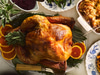
Photo courtesy of Jonathan Meter
Cooking from a Melissa Clark cookbook is like having a witty friend with you in the kitchen, one who can offer advice on what to swap for cilantro or how to keep your mashed potatoes from turning gummy. A prolific author with 46 cookbooks and a recipe developer for New York Times Cooking, she has a gift for making even the most ordinary one-pan dinner feel exciting, and injects her recipes with practical tips and substitutions so cooks can make any dish their own.
For Clark, the recipe development process is a collaboration between herself and her readers, who freely offer feedback on her NYT Cooking recipes. “I read all of the notes, especially when I have a new recipe that goes up, because I want to understand where people’s sticking point is, where the pain points are, the questions.” Her intimate understanding of the home cook is on full display in her latest endeavor, The Big Book of Dinner: Recipes and Rules (and How to Break Them). Billed as her most comprehensive cookbook to date, it delivers 175 recipes—from Sweet and Spicy Chicken with Cumin and Honey to Chickpea Harissa Soup with Butternut Squash—as well as 150 variations to please any palate.
While the recipes are heavily driven by reader questions, they also innately reflect a lifetime of personal experience. Clark’s roast turkey recipe, for instance, draws insight from not just the dozen or so versions she tested for NYT Cooking but the birds she cooked as a kid with her dad in Brooklyn.
Her rendition is the platonic ideal of a Thanksgiving turkey—juicy, beautifully seasoned, and encased in crispy golden skin. It’s also stunningly simple. “I really keep it as easy as possible not because I’m cutting corners but because I think actually you get a better bird by doing less,” she says. In celebration of the season, goop asked Clark to share her tried-and-true recipe, along with her dos and don’ts for turkey perfection.
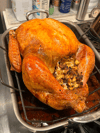
Photo courtesy of Melissa Clark
Do use a dry brine.
A dry brine involves rubbing the turkey with salt (and other seasonings as desired) ahead of time. This helps lock in moisture and is, according to Clark, the most important thing you can do to elevate the flavor. It’s also vital to achieving a crispy exterior, as it dries out the skin.
While Clark’s recipe calls for at least 12 hours of brining, even a couple of hours will have a massive impact. If you don’t add enough salt or give it enough time to absorb, “it’s going to taste bland, and there’s no amount of gravy that’s going to fix that.” An optional but umami-boosting trick is to rub the cavity with anchovies, one of Clark’s favorite ingredients.
Do dry out the skin.
This step is also crucial for enhancing the skin’s crispiness. Before the dry brine, pat the turkey dry with a paper towel (no rinsing beforehand), then salt and store uncovered in the fridge for up to three days.
Do use the proper tools.
For Clark’s recipe, you need little more than a big roasting pan, a roasting rack, a thermometer, and a sharp knife. Conventional turkey wisdom would have you believe you need a turkey baster for the best results, but Clark skips the baste altogether. Instead, she brushes the turkey with oil or butter, then exercises what she calls “some benign neglect in the oven” to create that prized crispy golden skin.
Do make the gravy ahead of time.
Clark’s Make-Ahead Gravy is a great way to help minimize Thanksgiving Day chaos (and is just as tasty as a gravy made straight from the turkey drippings). Prep it up to five days in advance, perhaps at the same time as your cranberry sauce. Then reheat and add the drippings from the bottom of the roasting pan before serving.
Don't use a wet brine.
With a wet brine, the turkey is submerged in a saltwater solution, which is said to tenderize the meat. But the extra liquid makes it harder to crisp the skin. What’s more, finding an adequately sized vessel that will fit in your fridge can be a headache.
Don't stuff the turkey.
By cooking the stuffing separately, you’ll encourage the turkey to cook more quickly, “because you don’t have a cavity filled with insulation,” Clark says. You’ll also get better textural contrast on the stuffing. “I like to put it in a shallow casserole dish, like a gratin dish, and then you dot it with butter, or you can even chop up some turkey skin and put that on top,” she adds.
Don't truss the turkey.
Many old-school recipes recommend tying the bird into a compact, even shape to help it cook more uniformly. But the breast inherently cooks more quickly than the legs, Clark says, and a trussed turkey restricts airflow, therefore slowing the cooking rate of the legs.