What a Top Derm Actually Uses When It’s Hot and Humid and Her Face Is Melting

Susan Buth / BLAUBLUT EDITION
When you’re a dermatologist, your own skin is a walking billboard—something board-certified dermatologist Macrene Alexiades, MD, PhD, knows a little something about. But Alexiades, who splits her summers between a little island in Greece called Skyros and the Hamptons, still enjoys summer to the fullest without jeopardizing her skin health. "You want to glean the advantages of the summer sun, sea, and sport, like adequate vitamin D, but still protect yourself against the harsh aspects of exposure,” she explains.
Alexiades credits her Greek heritage for her summer sun philosophy: “I was raised to believe you don’t go out in the sun during the peak hours at all,” she says. “Instead, the morning is for getting things done, then you have a big lunch, take a siesta in the afternoon, and head to the beach for a swim just before sunset.” Coupled with the Mediterranean diet and lifestyle, great sunscreen habits, and a few extra flourishes, she's developed a blueprint for protecting her skin against the elements. Here, her sun rules for summer and beyond.
Strategy #1: Keep Vitamin C in Your Skin Rotation
We all should be vitamin C freaks at this point. "Vitamin C is so important because it's one of our best protectants against free radicals," says Alexiades. "It is a fantastic antioxidant and free radical scavenger that works well with sunscreen."
Use a dedicated vitamin C—or make sure it's in your SPF. "Vitamin C is best used incorporated in a pH-balanced formulation," says Alexiades. "You want to make sure the acidic effects don't outweigh the beneficial UV scavenging and antioxidant effects you're looking for."


Strategy #2: Streamline Your Routine—But Don't Skip Your Neck and Chest
According to Alexiades, about 20-30 percent of her patients can get away without overhauling their skin care routine for the summer, but most patients she sees benefit from making small adjustments. "If you're oily or more acne-prone, switching from a lipid-rich, heavy moisturizer to something more lightweight can be so much more comfortable for skin," she says.
In the summer, she starts the morning with a gel cleanser to balance and clean her skin. "While my skin is still damp, I'll apply my face serum," she says of her milky, thick, super serum chock full of actives. "It's less lipid-heavy than the face cream, so it's perfect for my skin in the warm summer months."
Then she follows with a treatment for her neck and décolletage. "A dedicated neck and chest protection is crucial in the summer," says Alexiades. "The neck and chest will get a lot more sun exposure than you realize, so it's essential to treat that area."
All-in-one face serum

Neck and chest serum

Strategy #3: Just Put the Damn Sunscreen On…and Reapply Often
Even if it's early in the morning—and not what is considered "peak" UV levels—it doesn't mean you can skip the sunscreen. "Don't fool yourself that you're just going to be outside for a quick five minutes," says Alexiades. "Instead, make the assumption that you're going to be in the sun for at least 20 minutes."
When it comes to sun safety, it’s not just about harmful UV levels—it's also about latitude, too. “Those who are closer to the equator, like in Florida or the Caribbean, are in areas where there is not a safe UV range," says Alexiades. "You need to apply the highest possible SPF you can to protect your skin."
You also need to be religious about reapplying, as SPF gets photo-inactivated after two hours, she explains. "I reapply sunscreen every two hours and every time I get out of the water after swimming, once I'm dry," says Alexiades. And make sure you leave 15 minutes for it to get to work before going for another dip. "There was a series of studies that proved that it takes 15 minutes for sunscreen to absorb—or, in other words, to settle between the pockets and the pores and achieve an even distribution on your skin’s surface—so it can protect your skin and not immediately wash off in the water," she says.
Strategy #4: Sun Protection Isn't Just Sunscreen
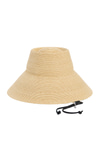
“Twenty, even 10 years ago, the quintessential dermatologist was covered head to toe in sun protective clothing and was white as a ghost with layers of sunscreen,” says Alexiades. Luckily, sunscreen formulas have evolved to be more cosmetically elegant—and new self-tanners do a brilliant job of mimicking a natural glow—so you no longer have to look like a ghost. But Alexiades still uses plenty of skin-shielding tricks whenever possible. Look for shade under a tree immediately at the beach or outdoors; it’s like nature's version of a beach umbrella. "I only leave the shade and go out in the sun when I'm going for a dip in the sea," she says. "And I love a wide-brim hat for extra protection."

Aegean Salt is the Secret to Great Skin and Hair
Alexiades spends her summers in Greece, soaking up the healing, glowifying benefits from the trace minerals of the sand and Aegean Sea. "Sea salt is very therapeutic for the skin," she says. "My skin feels like velvet afterwards." Her hair reaps the benefits too. "My hair just loves the salt from the sea," she says. "It tends to normally be more oily at the roots, so after I take a dip, it's so nice to have it feel soft, clean, and nourished." If you can’t make it to Greece, Alexiades likes a sea salt shampoo to mimic the benefits at home.
Salt scrub for hair

Body polish with minerals

Strategy #5: Don't Forget Your Hands
"Hands are the new neck in terms of what people need to protect," says Alexiades. "In the entire field of body sculpting and skin tightening, we almost never talk about hands, and it's my biggest focus right now," she says.
While hands are often an afterthought in our skin-care routines, they deserve extra focus and care in the summer when we're often washing away sunscreen protection, she says. "When I'm doing my morning routine, I'll add a swipe of my face cream or serum to the back of my hands and massage it in," she says. You can also use a dedicated hand cream for a dose of nutrients and moisture—and don't forget to extend your SPF to your hands either.


Strategy #6: Treat Your Body—and Your Feet—With the Same Care
Your body needs moisture and protection just as much as your face. "The summer months are where I really want to take advantage of skin-grade skincare for my body," says Alexiades. "I want my knees, my elbows, my stomach, everything to look as good as my face,” she says. For rich nourishment, she uses her body cream all over. "It's made with organic, high-performance ingredients that really work," she says.
Alexiades also notes that almost all of her patients deal with dry, cracked heels as a result of wearing sandals all summer. "Polishing your feet with a nice scrub to exfoliate that dead skin and then following it with a nice moisturizer is a great way to keep your feet sandal-ready," she suggests.

Strategy #7: Scale Back on Exfoliation
An exfoliating acid can be beneficial to incorporate into your routine in the summer months, but there are some considerations when you'll be in the sun.
"Acids work by breaking the bonds between the cells of the outer layer of the skin, which is helpful for people with oily or acne-prone skin, who can get more blackheads or whiteheads during the summer," she says. But you don't want to overdo it — Alexiades suggests limiting exfoliation to once a week with an alpha or beta hydroxy acid. "Do it on a Sunday night or evening when you know you aren't going to be in the sun the next day," she adds.
If you have normal or dry skin, Alexiades says to avoid or minimize exfoliating acids in the summer, as they can be too harsh. "It can end up stripping the skin cells that you want to support your skin barrier instead of the skin cells that are excessively stuck on oil skin."
Fruit AHAs:

BHAs:

Strategy #8: Lean Into No Makeup-Makeup
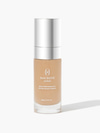
When you're following the rules above, you may find you need less makeup during the season—something Alexiades leans into. “I do my signature no-makeup-makeup finish of tinted moisturizer to smooth over my face, and I treat my lips with a little lip oil for plump moisture and color—and that’s it,” she says.
Opt for skin care-grade makeup to double down on your benefits. "My lip oil gives the prettiest plant-based wash of color and hydrates with ceramides, peptides, and more," says Alexiades, who especially likes the gorgeous-on-all-skin-tones red shade for summer. "And my tinted moisturizer is made with resveratrol, peptides, and more to treat my face."