Can You Really Get A Mini Lunchtime Breast Job?

Seven years ago, Heather, a 29-year-old healthcare administrator, lost a significant amount of weight, first through diet and exercise, and later with the help of GLP-1 medication prescribed for Hashimoto’s disease. The change was dramatic and largely welcome. Her shriveled breasts were not.
“They just deflated,” she says. What she wanted wasn’t larger breasts so much as a return to what weight loss had taken: shape, proportion, and a sense that her body still belonged to her.
Her experience is becoming increasingly common in the age of GLP-1s. Rapid weight loss doesn’t just thin the face or soften the jawline. It strips volume from the breasts, often leaving behind lax skin and little native fat to work with.
In response, a growing number of women are moving away from traditional implants and toward lower-impact procedures designed to restore volume more subtly. The shift reflects a broader change in aesthetic priorities: less augmentation, more restoration.
But for many patients, there is a practical limitation. After significant weight loss, there is often not enough fat left in the body to repurpose.
That constraint has helped fuel interest in newer approaches, including injectable fat derived from cadavers, tissue taken from deceased donors and injected to restore volume. That such options are gaining traction says less about medical necessity than about the current aesthetic moment, shaped by rapid weight loss, compressed recovery timelines, and a growing willingness to accept more experimental solutions in pursuit of controlled, natural-looking results.
“It may sound extreme, but purified tissue derived from cadavers has actually been used for years in other forms of surgery.”
When Heather consulted Darren Smith, MD, a board-certified plastic surgeon in New York, she found herself weighing options she hadn’t previously considered. Because she didn’t want implants, they focused on two alternatives: autologous fat transfer, which uses a patient’s own fat to restore volume, and a newer injectable made from processed donor tissue from cadavers. “It may sound extreme, but purified adipose tissue derived from cadavers has actually been used for years in other forms of surgery,” Smith explained, noting it has a very high safety record.
Given her autoimmune concerns and reluctance to introduce foreign material, Heather ultimately chose to use her own fat for the transfer. The procedure is straightforward in concept. Fat is harvested through liposuction, purified, and reinjected into the breasts. For the right patient, the result can be subtle and proportionate. “It feels natural and integrates well,” says Nathaniel Villanueva, MD, a board-certified plastic surgeon in Beverly Hills. But it is still surgery, which takes several hours, and requires recovery, particularly from the liposuction sites.
Not everyone is a candidate. Patients need sufficient donor fat, and the transferred cells depend on the blood supply to survive. Even under ideal conditions, only a portion of the fat persists long-term. “About 50 to 70 percent survive,” Smith says. Additional procedures are often needed to build volume.
Heather describes her recovery as manageable. She was back to work within a week. The result, she says, was exactly what she had hoped for. “My breasts are fuller and more balanced, but it still feels like me.” She is planning a second round to add slightly more volume.
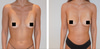
Heather's before and after photos after autologous fat transfer. (Photos courtesy of Darren Smith, MD)
Fat transfer has been performed for decades and is supported by a body of clinical experience. Still, it is not without risk. Complications can include swelling, bruising, and, in some cases, lumps caused by fat that does not successfully integrate. These can complicate breast imaging. “The patient may need additional imaging or even biopsy to confirm that what we’re seeing is benign,” says Ginger Slack, MD, an assistant professor at UCLA who specializes in breast reconstruction.
For patients without enough donor fat, newer materials have entered the market. Introduced in late 2025, AlloClae is an FDA-approved, sterilized injectable derived from cadaver tissue, repurposed into a scaffold designed to create immediate volume and support tissue growth over time.
The appeal is clear. The procedure is performed in-office, without general anesthesia or liposuction, and recovery is minimal. But the trade-offs are less understood. Long-term data remain limited, and questions about safety, particularly around inflammation and breast imaging, are still being studied.
Some experts are already urging caution. The British Association of Aesthetic Plastic Surgeons has warned against injectable breast fillers, citing risks that include infection, deformity, and interference with cancer screening, and has called for a ban.
“Until well-designed studies are done, I’m not using it,” says Slack.
For now, the choice between these approaches depends on anatomy, goals, and tolerance for uncertainty. Fat transfer offers a longer track record and uses the patient’s own tissue. Newer injectables like AllClae offer convenience, particularly for patients who have little fat to spare.
For Heather, the decision ultimately came down to familiarity and control. “I liked that it was my own tissue,” she says. The change was not dramatic, but it was enough. “I finally feel like myself again.”
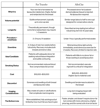
Fat Transfer vs. AlloClae
If you're interested in restoring a modest amount of volume with minimal downtime, these are two of the most cutting-edge options. Here’s how they stack up.