Top Plastic Surgeon Dr. Julius Few Breaks Down the Biggest Aesthetic Trends of 2026

Blaublut-Edition.com / Laurent Castellani
For years, plastic surgery coverage has oscillated between extremes: breathless (or judgmental) transformation porn or vague trend forecasting stripped of practical detail. At goop, we wanted something smarter and more in-depth—and useful, with the kind of information you'd normally only have access to via a paid consultation with a plastic surgeon.
And so, this month, we are introducing Ask a Plastic Surgeon, a new monthly column with Julius Few, MD—a board-certified plastic surgeon, founder of The Few Institute in Chicago, and one of the most respected voices in aesthetic medicine. As a surgeon and a product formulator, Few is both a perfectionist and a no-bullshit realist, which is why we felt he was the perfect partner for this new column about aesthetics—a topic our readers can’t seem to get enough of.
Each month, we’ll bring Few questions sourced from real patient concerns and questions: Which lasers actually work best? Will energy-based treatments make me age forward? What does recovery really look like from a modern-day facelift—and what can I do to facilitate healing? This month, for his introductory column, we asked him to step back and give us a bird’s eye view of the most important aesthetic shifts of 2026, from “rapid” breast augmentation to the unexpected rise of chin implants. The through line? A new aesthetic rhythm: more natural, more strategic, and—yes—more human.
“Right now, plastic surgery is undergoing one of its most exciting periods of innovation,” says Few. “Patients are better informed, but they’re also more selective. They want results that look like them—just better. And they want it all to feel more integrated. In the past, surgery existed in a vacuum. Now it’s part of a bigger conversation about health, weight, longevity, skincare, and recovery. You can’t isolate the aesthetic piece anymore. It’s all connected.”
Below, Few discusses the major trends that will define the year ahead and how they’re reshaping the patient experience.
A Q&A WITH JULIUS FEW, MD
What role do you think social media has played in the rise of aesthetics?
Full confession: I do not love social media. But one thing remains clear—the public is learning about plastic surgery at a record speed because of it. Patients are smarter consumers than ever before. They want honesty, clarity, and transparency. In 2026, the strongest social media trend isn’t flashy transformations—it’s educational content that shows real timelines, real healing, and the real process of achieving great results. From daily recovery diaries to yearlong scar updates, this shift has empowered patients to ask better questions and make safer, more informed decisions.
Let’s talk about GLP-1s. Can you explain how weight loss drugs (even microdoses) can change the structural integrity of people’s faces and how you address this in your practice?
Fast weight loss can hollow out the face and exaggerate skin laxity, especially around the jaw and neck. It can also lead to a heavier, looser-looking lower face. So we’re seeing a real need for customized solutions: sometimes it’s fat grafting, sometimes it’s skin tightening with lasers or radiofrequency, sometimes it’s surgery. But the key is timing. You want the patient’s weight to stabilize before making big structural changes.
For people who aren’t quite ready to go under the knife, you have long advocated for “stackable treatments.” What does that look like in your practice?
It means building a treatment plan over time. The most successful aesthetic plans are no longer built around a single procedure—they’re thoughtfully layered. Patients don’t want to look “done.” And devices are more precise now. Plus, recovery windows are shorter—so people can come in every few months instead of disappearing for three weeks. A typical plan would be built out over a year: Think neuromodulators, subtle volume, laser resurfacing, energy-based tightening, and medical-grade skincare. Not all at once, but sequenced. We used to try and fix everything in one visit. Now we phase it in. The effect is more natural, longer lasting, and easier to maintain.
Typical annual investment: $2,500–$10,000+
Energy treatments: $2,000–$7,000
Fat grafting: $4,000–$9,000


Ok, let’s talk about one of the most popular treatments in a typical stack: laser treatments. What’s new and most exciting in this category?
At the end of 2025, a company called Sciton introduced a new laser called the Halo Tribrid, a streamlined resurfacing treatment that combines three different wave lengths of energy in one device to improve texture, wrinkles, and pigmentation in just one session. In the past, you’d need three separate visits (and different types of machines) to get these kinds of results—typically a fractionated erbium for texture, a broadband light for pigment, and a collagen-stimulating resurfacing wavelength. Patients appreciate seeing bigger improvements in fewer visits, and the devices have become far more refined and customizable.
Is it safe for all skin types?
With proper settings and pre-treatment, yes. But this is not a casual, no-downtime facial. The downtime is similar to what you would see with a deep Fraxel laser, fractional CO2, or similar laser—four to seven days for complete recovery. But the results would have traditionally taken three visits with three different types of lasers.
Typical cost: $1,800–$5,000 per session
Series: $3,500–$10,000
More and more people are getting facelifts at earlier ages, likely due to the rise in GLP-1s, not to mention vastly improved techniques that minimize downtime and yield more natural rests than ever. What’s new here?
Now that deep plane and SMAS facelifts—techniques that lift not just the skin but the deeper facial tissue and musculature—have gone mainstream, patients have become more educated and discerning about technique. And with that sophistication comes a new focus: recovery. The biggest innovation in facelift surgery today isn’t about how we lift—it’s about how we heal. That’s where the hemostatic net comes in. Most people associate facelift recovery with drains. I can’t overstate how much people hate drains. They’re uncomfortable, they increase bruising and swelling, and they limit mobility. The hemostatic net replaces that. It’s a specialized external taping or stitching method—originally adapted from fertility surgery, where managing fluid dynamics postoperatively is critical—that uses compression to control bleeding and fluid buildup. It provides gentle compression along precise vectors, dramatically improving early healing.
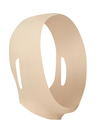
So it’s like a compression garment for your face?
Exactly. But this is surgical—placed in the OR, not something you put on at home. The idea is similar to those facial compression “stockings” some people use post-op or post-laser. But this is far more precise and effective.
You mentioned that chin augmentation has become an integral part of modern facelifts. Why?
A balanced face starts with balanced structure. As facelifts become more sophisticated, more surgeons are incorporating chin augmentation into facial rejuvenation. Even a small chin implant or jawline enhancement can dramatically improve the neckline and bring harmony to the overall facial shape. My colleagues and I will typically use a given patients fat, a long-acting FDA approved chin/jawline filler, or surgical implant made of silicone or synthetic material inserted through the facelift incision.
Typical cost: Chin implant: $3,500–$8,000; Add-on to facelift: $2,500–$5,000
You also say lip lifts are the rise. How does this differ from lip filler?
With patients seeking more natural results and less filler, the upper lip lift has become one of the fastest-growing procedures. By shortening the distance between the nose and the lip, it restores youthful proportions and soft tooth show. [Editor’s note: this is plastic-surgery-speak for a subtle glimpse of the upper teeth when your lips are at rest or when you speak—not a full smile, not gums, just a hint. In younger people, the upper lip tends to sit a little higher and shorter, so a few millimeters of the upper incisors show naturally. As we age, the upper lip lengthens and rolls inward, covering the teeth and making the mouth look heavier or more severe]. When combined with light resurfacing, a lip lift can transform the perioral area with minimal downtime and none of the dreaded "duck lip" you often see with filler.
Typical cost: $3,500–$8,000; add perioral laser $800–$2,500
Let’s talk about Botox fatigue. A lot of people my age are saying it doesn’t work like it used to. Why is that?
Because it doesn’t. After years of use, the forehead muscles adapt. Patients start to see weird spiking in the outer brow, or flatness in the center, or movement in places that used to stay smooth. That’s where the modern temporal brow lift comes in. This is an outpatient procedure that can typically be done in 1 hour, through hidden incisions in the hairline. It is not the forehead lift of the 80’s and 90’s; it is a targeted, more natural approach to upper facial surgery.
Typical cost: $4,500–$10,000
One of the buzziest things we’re hearing about is “rapid breast augmentation.” Is it really as quick and low-trauma as it sounds?
It is—for the right patient. If you are looking to go up one to two cups, it’s a game changer [Editor’s note: Few says it’s less effective for people looking to make a much more drastic change]. Breast augmentation has always been one of the most sought-after procedures, but what’s changing now is how it’s done. My close friend and colleague, Steven Teitelbaum, MD, will be one of the first to use Preservé Rapid Breast Augmentation, a new technique that involves streamlined pocket creation and low-trauma implant placement, which helps reduce swelling and speed up recovery. Patients feel ready to return to daily life sooner, with less discomfort and a more predictable healing process. What’s wild is that patients often don’t even need general anesthesia. Some are going out to dinner the same night. Others are back to working out within a week.
How is that even possible?
That’s what surprises people. The implant itself is a small, next-gen silicone gel that expands once it’s been placed inside the breast. It’s delivered using a very precise, FDA-approved system that eliminates a lot of the friction and blunt force we used to rely on. The pocket is also created in a much more controlled way. That’s what minimizes swelling, bruising, and the usual surgical trauma. When placed properly, it’s undetectable under the skin. Of course, placement, patient anatomy, technique, and tissue quality matter. This isn’t a magic wand, but it’s a much smarter system. If you are looking for massive enlargement of the breast, this is not the solution for you.
Typical cost: Starting at $8,000
Not everyone is rushing to go bigger. You say you’re also seeing a rise in implant removals with lifting. What’s driving that?
This is a conversation I’m having every week. As women age or go through big hormonal or lifestyle shifts, the implants they got in their 20s or 30s can start to feel out of sync with their bodies. Breast tissue gets fattier and less dense with age and hormonal shifts. It settles differently. That can make implants look or feel unnatural, even if nothing is “wrong” with them. It’s something most people don’t realize until they see it in the mirror. Of course, women have been getting breasts lifts for a long time. What’s changed is how we approach the reset. Today, we lift and reshape the breasts using the patient’s own tissue rather than relying on implants for structure. Internal support has also evolved: we can now reinforce the breast from within using newer mesh-based techniques, a more precise approach to nipple positioning, or, in cases where implants are removed, by repurposing the scar capsule left behind to support the natural tissue. Together, these advances allow for results that look far more natural and refined than what was possible a decade ago.
Typical cost: $9,000–$18,000+
In your practice, you emphasize healing—not just results. How do you integrate wellness into your practice?
Plastic surgery is no longer just about the operating room. Patients are increasingly expecting—and benefiting from—support that enhances recovery and long-term results. As a practitioner, I’m interested in anything that supports the immune system, lymphatic flow, collagen production, and circulation. Nutrition planning, lymphatic therapy, sleep optimization, red-light therapy, and personalized scar care are becoming part of a comprehensive care model. This integrated approach helps ensure that great surgical work heals beautifully.
Typical cost: Wellness programs $500–$3,000; lymphatic therapy $300–$1,200


One final question. What’s your advice to patients heading into 2026?
Don’t chase the biggest trend or the buzziest product. Find someone who understands anatomy, healing, and long-term planning. The best results are the ones you still love five years from now.