How Can I Keep My Neck Looking As Young As My Face?

Nora Ephron said it best: If our faces are lies, our necks are the truth. “You have to cut open a redwood tree to see how old it is, but you wouldn’t have to if it had a neck,” she famously wrote in I Feel Bad About My Neck. In the book, she put words to a reality most women eventually realize with grim resignation: When it comes to aging, you can manage your face for a long time, but your lower face is a bit of recalcitrant bitch. Cancun in 1994? She remembers that mineral sunscreen you didn’t wear—and she’s got the sunspots-and-wrinkle receipts to prove it.
So, what’s really going on here? To understand why the neck is so tricky to treat, I turned to top plastic surgeon Julius Few, MD, who first gave me a quick primer on anatomy. With fewer oil glands and less collagen, the skin on the neck is thinner and drier than the rest of the face, he explained.
We also ask our necks to do a lot of work. Facial muscles are expressive and precise, but they work in short bursts—smiling, speaking, reacting. Neck muscles, by contrast, almost never get a break. They’re constantly stabilizing your head, adjusting your posture, and responding to gravity, screens, and movement. If you’re reading this article on your phone, you probably already know that tech neck is a gateway to turkey neck. The disturbing reality is that most of us look down at our phones dozens—often hundreds—of times a day. You turn your head to talk, drive, walk, listen. Even when you’re still, the neck is making micro-adjustments to keep the head upright. It’s no wonder the platysma, a hard-working muscle upon which the structural integrity of your neck rests, wears out like a used tire with age.
To stave off our collective slow dance into the turtleneck aisle, I did a very deep dive with Few to see what can—and can’t be done—to achieve the snatched jawline of our youth. His answers may surprise you.
A Q&A WITH JULIUS FEW, MD
Amy Synnott: There’s been a surge of interest in the jawline lately, particularly among women in perimenopause and menopause, when hormonal changes start showing up very visibly in the lower face and neck. At what point do people typically notice loss of jawline definition or early jowling?
Julius Few, MD: I see it as early as the late 30s, especially in people with hereditary factors. Many patients—men and women—will say their mother, father, or both started to look saggy in their 30s. Weight fluctuation plays a role, and with GLP-1s in particular, relative weight reduction followed by laxity has become a major contributor. But for women, it’s often during perimenopause that these changes become noticeable, because estrogen decline affects skin quality and tissue support.
A.S.: When people talk about jawline aging, they often collapse everything into the idea of “sagging.” Anatomically, what’s actually happening in the neck and jawline as we age?
J.F.: There are several things happening at once. First, it’s important to understand that the skin of the neck—up to the level of the jaw—is the thinnest skin on the body, second only to the eyelids. That’s critical. With thinner skin, you have less collagen and less resilience from the start.
What gives the neck the appearance of thickness and support is the muscle underneath, the platysma. That muscle acts like a sling that helps keep the neck skin taut. Over time, with age and constant movement, that platysmal sling loosens. As it loosens, it stops providing the same structural support.
Another major factor is the submandibular salivary glands. These glands are held in place by ligaments that also loosen with age. As those ligaments weaken, the glands descend. When that happens, they blur the jawline and make it look less defined.
Genetics are hugely important here. Some people’s glands sit lower naturally. I’ve seen people in their 20s with large or low-sitting glands, and those individuals are going to show jawline changes much earlier.
“Treating the face is easier because skin quality responds better to treatment. The neck is much harder to change. It’s one of the most mobile parts of the body, and that constant motion makes it difficult to achieve results that hold. So, what you often see is an overtreated face and an undertreated neck.”
A.S.: You’ve also talked before about jaw structure itself playing a role.
J.F.: Absolutely. I like to use the analogy of a curtain rod and a curtain. The jaw is the curtain rod; the skin and soft tissue are the curtain. If the jaw is relatively short or shallow, there’s simply less structural support for the tissue to hang from. As skin loosens with age, the lack of a strong bony framework makes jawline changes more apparent.
A.S.: And then there’s the issue of people who’ve always had some fullness under the chin—even when they’re young.
J.F.: That’s often anatomy. The position of the hyoid bone and cartilage in the front of the neck can create the appearance of a double chin right out of the gate. If someone is genetically predisposed, all of these aging-related changes tend to show up earlier and more dramatically.
A.S.: I think many women are diligent about treating their face but don’t think about their neck until it’s too late. As someone who has religiously used SPF on my face (not my neck sadly!) since my 20s and done Botox off and on since my 30s, I would say I fall into this category. How common is that?
J.F.: That’s extremely common. I would say it’s the rule, not the exception. Treating the face is easier because skin quality responds better to treatment. The neck is much harder to change. It’s one of the most mobile parts of the body, and that constant motion makes it difficult to achieve results that hold. So, what you often see is an overtreated face and an undertreated neck.
A.S.: Given that reality, when should women start thinking about prevention for the neck?
J.F.: Earlier than most people do. I recommend starting retinol on the neck in the 20s. It’s one of the most effective ways to preserve skin thickness. As estrogen declines, maintaining skin quality becomes even more important. Sunscreen and moisturizer should also be applied to the neck—whatever someone uses on their face should extend down.
A.S.: What about the at-home tools that so many women are experimenting with now—red light masks, the LYMA Laser?
J.F.: Severity matters. I like to say that when you barely need it, everything works. And that’s true. These tools can be helpful for someone in their 30s or early 40s with very mild laxity. But once there’s a noticeable face–neck mismatch, those tools may not deliver the results they're looking for.
They work best as part of a comprehensive approach that includes skin care, moisturization, and lymphatic massage—gua sha, manual techniques—done correctly, following the anatomic lymphatic pathways.
The Neck Shop
 LYMALYMA Laser PRO$5995.00shop now
For early neck laxity, the LYMA Laser PRO is a solid investment: Near-infrared laser light works below the surface to support collagen and cellular repair—before looseness sets in and more aggressive treatments enter the chat.
 Dr. Few SkincareClean Retinol$195.00shop now
The neck needs collagen support—but it also needs kindness. This formula pairs real retinol (to boost turnover and firmness) with Argireline and Matrixyl to smooth and strengthen, plus calming green tea so delicate neck skin can actually tolerate it.
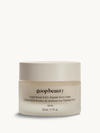 goop BeautyYouth-Boost NAD+ Peptide Rich Cream$105.00shop now
If your neck skin is too sensitive for even a gentle retinol, goop’s Youth-Boost NAD+ Peptide Rich Cream is a great alternative. It supports collagen and cellular repair via NAD+ and peptides—firming and smoothing the delicate skin of the skin without causing any irritation.
 Pietro Simone SkincareSkin Whisperers Obsidian Gua Sha Reformer$89.00shop now
Begin at the collarbone and move everything down (never in circles). You’re guiding fluid toward the lymph ducts, not pushing it back where it started. Then use soft strokes from ear to collarbone to encourage drainage and give the neck a subtly lifted, more toned look.
A.S.: Can Botox do anything in the neck area?
J.F.: Judicious Botox can be very helpful. When platysmal bands start to appear—usually paired columns in the mid-neck—they pull the skin inward and downward, which eats away at the jawline. Treating those bands two or three times a year can meaningfully slow visible neck aging in the right patient.
A.S.: I don’t think most people would even know to look for that.
J.F.: Most people don’t. Until they see it.
A.S.: And filler—does it have a role in the neck and jawline?
J.F.: In this area, we’re really talking about biostimulatory fillers—Sculptra or hyperdilute Radiesse. These aren’t about filling volume in the traditional sense. They work by thickening the skin and improving tone. In experienced hands and in patients without severe laxity, they can be very effective. But if skin is very loose, or if the injector isn’t experienced, you can get lumps, irregularity, or unnatural contours.
A.S.: Kybella® [an injectable treatment designed to destroy fat cells under the chin] was once positioned as a solution for the neck. Does it still have a place?
J.F.: It works, but it’s not a replacement for liposuction or surgery. It requires multiple treatments—three or four sessions spaced months apart—and there’s significant downtime. For small, localized fat pockets, it can still work well. I use it selectively. But it’s not a global solution.
A.S.: How do you decide whether someone needs fat removal versus tightening?
J.F.: That’s a crucial distinction. Energy-based treatments do not work on fat. Fat insulates the energy. If someone has fat contributing to a double chin, that fat has to be removed—through liposuction or another method—before tightening will work. Energy-based devices are for laxity, not volume.
A.S.: Buccal fat removal has been part of the “snatched jawline” conversation. Does it belong here at all?
J.F.: Very rarely. True buccal fat hypertrophy is uncommon—you might see one case in a few hundred patients. Removing buccal fat in most people leads to a gaunt appearance and actually makes jowling more noticeable. And it’s very difficult to reverse.
A.S.: Are there neck-specific trends you’re cautious about right now?
J.F.: Muscle-stimulating devices that promise a lifted or snatched neck can worsen platysmal banding. Injecting filler into loose neck skin without a clear plan can create irregularity. Compression garments sold online don’t work.
A.S.: At what point does the neck simply stop responding to non-surgical treatments?
J.F.: When you see three things together: significant skin laxity, visible platysmal banding, and jowling that’s structural rather than just skin quality. At that point, non-surgical treatments won’t give a durable or satisfying result.
“Shortcuts in the neck tend to show up later. The neck doesn’t forgive.”
A.S.: And that’s when surgery becomes a neck-specific decision?
J.F.: Correct. A standalone neck lift can be ideal for the right patient—someone whose face still looks appropriate for their age but whose neck doesn’t. It’s one of the most satisfying procedures we do. Recovery is often measured in days to a couple of weeks, and it can delay the need for a facelift for years.
A.S.: There’s been a lot of talk lately about gland shaving as a way to sharpen the jawline. Can you explain what that actually involves—and why you’re cautious about it?
J.F.: Gland shaving refers to reducing the submandibular glands, which sit beneath the jawline and are part of normal anatomy. As people age—or lose weight quickly—those glands can become more visible, especially when the surrounding fat and skin thin out. The issue is that removing or reducing them is permanent. You’re taking away structure to create definition, and that can backfire.
A.S.: In what way?
J.F.: The glands help support the contour of the neck. When you remove them, you may get short-term sharpness, but over time you can see more hollowness, more laxity, and a neck that actually looks older. It’s also not reversible. That’s what concerns me—it’s increasingly being framed as a minor contouring tweak, when in reality it’s a structural change. And gland removal carries real risk if done by surgeons without deep experience—there are important nerves in that area, and complications can be serious.
A.S.: Are there situations where it makes sense?
J.F.: Very selectively. In older patients with significant gland prominence and good skin support, it can be appropriate. What worries me is seeing it offered to younger patients, or to people who’ve lost weight rapidly, where the issue isn’t the gland itself—it’s loss of fat, skin quality, or muscle tone. In those cases, shaving the gland doesn’t address the real problem.
A.S.: So, it’s being used as a shortcut.
J.F.: Exactly. And shortcuts in the neck tend to show up later. The neck doesn’t forgive.