Beyond Paris: Five Days in Burgundy and Champagne
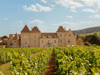
Photo courtesy of Château de la Commaraine
Paris has a way of making it difficult to leave. There are always more tables to book, exhibitions to see, shops to wander into, and old favorites worth returning to. But just beyond the city, the pace shifts entirely: Champagne, with its rolling vineyards and storied maisons, is only 45 minutes away by train, while Burgundy’s medieval villages, vineyard-lined roads, and legendary domaines are within easy reach.
Recently, I flew La Compagnie’s all-business-class route to Paris and brought my mom along for the ride, which made the trip feel even more special. We spent a couple of days revisiting Paris, then headed into wine country for vineyard bike rides, long lunches, spa afternoons, and more than a few bottles worth buying by the case.
Below, the five-day travel diary (and my case for the one cardigan you need to pack).
Day One: Paris
Paris was the one major European city I had somehow never made it to. I grew up traveling often, with close family spread throughout Europe and a mom who had retired from an airline, but Paris had always remained unchecked on my list. For a first visit, it was hard to imagine a more cinematic introduction than Le Meurice. The hotel, located directly across from the Tuileries on rue de Rivoli, strikes that very Parisian balance between grandeur and eccentricity, with ornate rooms, contemporary art, and some of the best views in the city.
Our suite felt more like a sprawling apartment, with pale paneled walls, French doors, and a terrace overlooking the Tuileries, with the Louvre to the left and the Eiffel Tower to the right. I know there are cooler, less touristy corners of Paris to discover, but when my mom and I stepped out on our terrace, we both laughed in that disbelieving, “Is this real?” kind of way. We popped a bottle of Champagne and stood there taking it all in. She had been to Paris before; for me, it was one of those first-trip moments I’ll always remember.
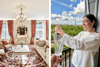
Photo courtesy of Le Meurice and Sandra Slusarczyk
Eventually, we pulled ourselves away from the view and headed through the Tuileries to Café de Flore for a light bite and some of the best people-watching in Paris. On my list to check out was Rubirosas, the new venture from jewelry designer Lauren Rubinski, whose jewelry pieces we’ve carried in the goop shop for years. The concept extends her eye for color and proportion beyond jewelry to crisp unisex button-downs in bold, electric hues, cashmere knits, loafers, and pajamas. I immediately wanted every colorway of her poplin shirts.
Because spring weather in Paris can be unpredictable, and after getting caught in cold, rainy wind, we happily retreated to Le Meurice. We pulled up seats at Bar 228, a cozy, low-lit hideaway for martinis and live jazz, before moving on to Le Dalí for dinner. Named for Salvador Dalí, one of Le Meurice’s most famous longtime guests, the restaurant carries his eccentric spirit through its surrealist-inspired surroundings. We ordered the sole meunière and steak frites with a bottle of red and took it all in, feeling very classic, very French.
The next morning, though, may have been my favorite meal of the stay. Breakfast is served in the wildly opulent Restaurant Le Meurice Alain Ducasse, beneath chandeliers, gilded moldings, and frescoed ceilings. The standout was a smoked-salmon eggs benedict unlike any I’d had before: perfectly runny eggs delicately wrapped in silky smoked salmon. Even if you’re not staying at Le Meurice, breakfast here is a must.
Day Two: Paris to Burgundy
After breakfast, we took the train from Gare de Lyon to Dijon, an easy ride of about an hour and a half, then drove 45 minutes south toward Pommard. Château de la Commaraine had just reopened after a major restoration, and I expected a grand entrance. Instead, we drove through the tiny village of Pommard, turned down an unassuming back road, and suddenly found ourselves at a nondescript gate. My mom and I both wondered, for a second, if we were in the right place.
Then the gates opened. On the other side was the château, with its sprawling courtyard, centuries-old stone buildings, and walled vineyard tucked behind the village streets. It felt almost deliberately hidden, which made the reveal that much better. We were welcomed with Kir Royales, the classic Burgundian aperitif made with crème de cassis and sparkling wine. We were both immediately taken by the design: original stone and timber had been preserved, but the palette felt fresh and modern, with clean, restrained interiors that complemented rather than competing with its history. That balance of old and new made the château feel immediately warm and welcoming.
What makes staying here especially unique is how immersed you are in the estate itself: You can tour the cellars, taste the wines, or simply step outside and find yourself among the vines. During a property tour, we stopped above the vineyard, framed by an old stone wall, as the director explained that a clos is a walled vineyard, while a monopole means the entire vineyard belongs to a single estate. Clos de la Commaraine is both, a rare combination in Burgundy. Once I understood the distinction, I started noticing those terms on bottles throughout the rest of the trip, and it gave me a new appreciation for just how much history, specificity, and sense of place can be contained in a single bottle of Burgundy.
That evening, we settled in for dinner at Le Clos, the château’s intimate bistro-style restaurant. I noticed that the dining room wasn’t filled exclusively with hotel guests; locals were arriving to meet friends and family, giving it the energy of a neighborhood restaurant. The menu leaned into Burgundy without feeling overly traditional. Standouts included a homemade duck pâté en croûte with pistachios and pickles, a smoked organic egg served meurette-style, and barbecue cod with lemon orzo risotto and red-wine béarnaise. We paired it all with a bottle of Burgundy recommended by the sommelier. With the weather still chilly outside, settling in over a long dinner and a bottle of red felt like exactly where we wanted to be.
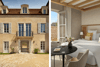
Photo courtesy of John Athimaritis and Château de la Commaraine
Day Three: Burgundy
One of our favorite parts of the stay was hopping on the château’s e-bikes and riding through the vineyards to the nearby town of Beaune. The sun was out, and after several grayer days on the trip, it felt good to be outside. The route to Beaune is mostly flat, winding along quiet roads through seemingly endless rows of vines, old stone walls, and rolling hills. At certain points, it really did feel like we were in a movie. Exploring Burgundy this way ended up being one of the best parts of the trip.
Once in Beaune, we toured the Hospices de Beaune, the 15th-century former hospital with its instantly recognizable glazed-tile roof. Walking through its preserved wards, chapel, and grand hall offered a vivid glimpse into medieval Burgundy, made even more remarkable by the fact that the building continued to serve as a hospital for more than 500 years. Afterward, we found a café on the cobblestoned square outside for lunch before making our way back toward Pommard.
We stopped at Château de Pommard for a tasting focused on Clos Marey-Monge, its 20-hectare vineyard divided into seven distinct plots, each with a different mix of clay, limestone, marl, and iron-rich soil. Seeing samples of the different soils laid out in front of us, then tasting pinot noirs from those plots side by side, made the idea of terroir feel incredibly tangible. Some wines were lighter and more fruit-forward, others deeper and more structured, all from the same grape and vineyard. From there, it was only a five-minute bike ride back to La Commaraine, a reminder of just how closely Burgundy’s villages, vineyards, and wineries are connected.
Back at La Commaraine, we headed straight to the subterranean spa beneath the château, which has the cool, hushed feeling of a wine cellar, only this one is devoted to massages, hammams, and cold plunges. After full-body massages, we moved between the sauna and cold plunge before finishing at the heated pool overlooking the vineyards.
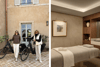
Photo courtesy of Sandra Slusarczyk, John Athimaritis, and Château de la Commaraine
Day Four: Burgundy to Champagne
We said goodbye to Pommard and headed north toward Champagne, arriving in Champillon by late afternoon to check into our next stop, Royal Champagne.
It was an immediate change of pace. Where La Commaraine had felt intimate and tucked away, Royal Champagne was bigger, livelier, and more resort-like. Perched above the village, the hotel overlooks the Marne Valley, with vineyards rolling across the hills and tiny villages scattered below. The property is designed around that view, and from our terrace we poured two glasses of Champagne and sat outside, appreciating that what we were drinking had come directly from the landscape in front of us.
The wine may be the obvious draw, but the spa is nearly as compelling. We spent the afternoon moving between the sauna, steam room, Jacuzzis, and indoor and outdoor pools overlooking the vineyards. The 25-meter indoor pool, framed by floor-to-ceiling windows, was especially striking. Judging by the French accents around us, plenty of locals had the same idea. It felt like the kind of place Parisians escape to for a long weekend, splitting their time between Champagne houses and the spa.
That evening, we settled in for dinner at Le Bellevue, the more relaxed of the hotel’s two restaurants. Our table looked out over the vineyards, and we kept things classic: ribeye with béarnaise and fries for me, duck breast with apples and cider jus for my mom. We ordered a bottle of red recommended by the sommelier, then quickly realized we were in the minority. Nearly every table around us was drinking Champagne straight through dinner, a very Champagne-region move I wasn’t quite bold enough to adopt yet.
After a quick nightcap at the Abysse Bar, we settled in for the night, both looking forward to exploring more of the Champagne region the next day, one glass at a time.
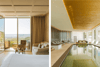
Photo courtesy of Royal Champagne
Day Five: Champagne
We took a quick 10-minute Uber down the hill into Épernay to explore Avenue de Champagne. The wide, grand street is lined with historic mansions belonging to names like Moët & Chandon, Perrier-Jouët, de Venoge, Boizel, and Mercier. We both had the same thought: It felt like Fifth Avenue or Rodeo Drive of Champagne, only instead of fashion houses, it was one storied maison after another.
We didn’t have time for a full cellar tour, so we wandered the avenue and popped into a few houses, each with its own personality. Perrier-Jouët felt especially lively and lush, with its signature floral motifs throughout. We ordered two glasses of Champagne, served in floral-painted glasses, and ended up buying a bottle and two glasses to take home, a small keepsake from the trip.
After an afternoon of tasting and shopping, we caught the 45-minute train back to Paris. Somewhere along the way, I realized how naturally both Burgundy and Champagne lend themselves to a mother-daughter trip: quiet bike rides through the vineyards, long lunches, great spas, wine and Champagne tastings, and afternoons spent wandering somewhere new. Having a few uninterrupted days with my mom to explore, linger over meals, compare notes, and simply spend time together felt like a luxury in itself.
Paris will always be Paris. But the next time you’re locking in restaurant reservations and adding new shops to your list, leave a little room for what lies beyond the city. Just a few hours away, Burgundy offers quiet roads, vineyard lunches, and afternoons on two wheels, while Champagne brings sweeping views, serious spa time, and a very good reason to start drinking bubbles before noon. Paris may be the starting point, but Burgundy and Champagne make the trip that much richer.
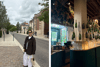
Photo courtesy of Sandra Slusarczyk