5 New Novels by Women About the Cost of Desire
We cover things we're into and think you might be, too. If you purchase through an external link here, goop may earn a commission.
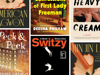
We all want a life that feels rich—in love, purpose, possibility, and even a little excess. But what happens when the pursuit of more begins to overshadow what we already have?
This month’s five novels explore the seductive pull of wealth, status, and success, and the complicated choices we make as we strive to attain the lives that we think we want. Together, these female authors ask whether having it all is really the same as having what matters most.
Min Jin Lee, American Hagwon
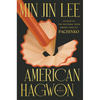
The bestselling author of Pachinko returns with a sweeping family saga about ambition, reinvention, and the sacrifices we make in pursuit of a better life. Spanning South Korea, Australia, and California, American Hagwon follows the Koh family as financial upheaval and personal betrayal upend their once-comfortable existence. Forced to start over in America, John and Helen Koh struggle to rebuild their lives while securing a brighter future for their three children. Education becomes central to their hopes, particularly through the fiercely competitive world of hagwons, private tutoring academies where families invest heavily in their children's academic success. But as the Kohs discover, the promise of upward mobility comes with its own pressures, disappointments, and difficult compromises.
Lee's greatest strength lies in her ability to make the ordinary details of family life feel deeply consequential. Her prose is clear-eyed and understated rather than lyrical, yet her storytelling is rich with emotional insight, capturing the quiet sacrifices, complicated loyalties, and unspoken tensions that bind generations together. With a sprawling cast of characters and an intricate web of relationships, she creates an immersive portrait of a family navigating the shifting definitions of success across cultures. At 656 pages, the novel unfolds deliberately, but its emotional depth and compassionate portrayal of imperfect people make it a rewarding read. Ultimately, Lee asks whether the relentless pursuit of opportunity and achievement brings us closer to the lives we want or distracts us from what makes those lives meaningful.
Sarah Blakley-Cartwright, Heavy Cream
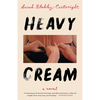
In Heavy Cream, Sarah Blakley-Cartwright explores the seductive pull of wealth and the complicated search for belonging. Sixteen-year-old Gerry has spent her childhood drifting along the West Coast with her unpredictable mother, living an unconventional existence defined by financial instability and emotional upheaval. When her mother abruptly leaves for Australia, Gerry finds herself on the East Coast under the influence of three very different women. There's Bonnie, her mother's college friend who lives in Connecticut; Nell, her ambitious New York artist aunt; and Finley, a wealthy Manhattan socialite who introduces Gerry to a world of extraordinary privilege. Each offers a different vision of the life Gerry might lead.
Blakley-Cartwright's lively, sharply observant prose captures both the allure and absurdity of New York's moneyed circles. Gerry is a particularly engaging narrator, precocious and calculating yet still vulnerable to the attention of women who seem to offer everything her mother could not. The novel works especially well as a comedy of manners, using its contrasting female characters to explore competing ideas about independence, ambition, and fulfillment. While the story occasionally has the improbable quality of a modern fairy tale, its emotional questions are grounded in the complicated dynamics of motherhood and belonging. Beneath the beautiful apartments, exclusive schools, and glamorous lifestyles is a perceptive coming-of-age story about discovering that privilege and happiness are not necessarily the same thing.
Bonnie Garmus, Peck & Peck
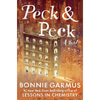
Following the runaway success of Lessons in Chemistry, Bonnie Garmus turns her attention to the eccentric world of literary publishing in 1980s New York City. Batter Gray has never been particularly interested in money or conventional success. His great passion is poetry, much to the disappointment of his parents, who would prefer he pursue a more lucrative career. When Batter unexpectedly lands a job at Peck & Peck, an esteemed but spectacularly dysfunctional poetry magazine, he believes he's found his calling. Instead, he finds himself making photocopies in the basement, navigating absurd office politics, and becoming entangled in a bitter feud between the publication's twin owners.
Garmus brings her signature wit, quirky characters, and boundless imagination to this affectionate satire of the literary world. The novel is filled with wonderfully eccentric details, from its elaborate offices to the magazine's obsessive devotion to poetry, although its whimsical humor occasionally veers toward the overly precious. Beneath the workplace chaos is a surprisingly earnest defense of creativity in a culture that measures success primarily in dollars. Batter's refusal to abandon his passion gives the novel its emotional center, challenging the assumption that ambition must always lead to wealth or prestige. It's an entertaining reminder that pursuing what you love can be its own form of success.
Emma Cline, Switzy
In her latest novel, Switzy, acclaimed writer Emma Cline introduces David Hastings, a once-successful businessman in his seventies who is confronting the limits of wealth, power, and control. Traveling aboard a private jet to Switzerland with his young assistant, Cody, David has arranged to end his life in Zurich as he struggles with dementia. But first, he hopes to reconnect with his daughter, Rebecca, in London and an estranged old friend in France. As David’s memory deteriorates, fragments of his privileged past emerge, including recollections of his failed marriage. Together, these relationships reveal a life marked by professional success, emotional distance, and unresolved regrets.
Cline's restrained, exquisitely controlled prose makes Switzy an unsettling and deeply affecting portrait of a man losing his grip on the world. Through fragmented memories, disjointed observations, and moments of dark humor, she places readers inside David's increasingly unreliable consciousness. His strained relationship with Rebecca and memories of his ex-wife provide a compelling counterpoint to his self-absorption, exposing the emotional distance that wealth and influence have allowed him to maintain. Longlisted for the Booker Prize, Switzy is a psychologically intricate literary novel that rewards close attention. Cline refuses to romanticize her protagonist, offering instead a haunting examination of ambition's limitations and what remains when everything that once conferred status begins to disappear.
Deesha Philyaw, The True Confessions of First Lady Freeman
In The True Confessions of First Lady Freeman, author Deesha Philyaw introduces us a larger-than-life protagonist who has seemingly achieved everything she once dreamed of. Married to the pastor of a 25,000-member Georgia megachurch, Scharisse Freeman enjoys high fashion, lucrative business ventures, and a privileged lifestyle. But her glamorous public image conceals a complicated past and her outspokenness has alienated her from the church's more traditional first ladies. On the eve of her 40th birthday, an invitation to compete in the coveted First Lady USA pageant offers Scharisse a chance at social acceptance but long-buried secrets threaten everything she has built and reveal how desperate she is for the approval of people who refuse to accept her.
Philyaw’s sharp, conversational prose turns The True Confessions of First Lady Freeman into a deliciously irreverent story about faith, fortune, and the performance of perfection. Her greatest strength is her ability to make Scharisse simultaneously outrageous, vulnerable, and impossible to resist, while her wicked sense of humor turns the insular world of megachurch royalty into a fascinating study of wealth, hypocrisy, and female ambition. Beneath the extravagant clothes and deliciously scandalous behavior lies a surprisingly thoughtful examination of respectability and belonging. The result is a funny, provocative novel about the difference between being admired and being genuinely comfortable with yourself.